


Hey there! As a supplier of hooked end steel fibers, I often get asked about the various impacts these fibers have on concrete. One question that's popped up more frequently lately is whether hooked end steel fibers have any impact on the thermal conductivity of concrete. Let's dig into this topic and see what we can find out.
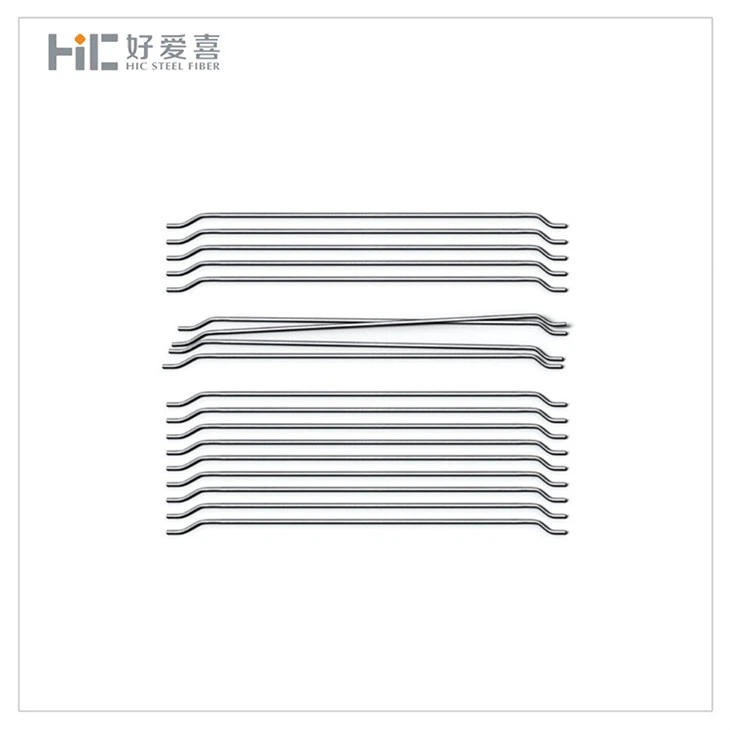
First off, let's understand what hooked end steel fibers are. These are basically steel fibers with hooked ends, which are added to concrete to enhance its properties. They're used in a wide range of applications, from Steel Fiber for Commercial and Industrial Floor to other construction projects. The hooked ends help the fibers bond better with the concrete matrix, providing improved crack resistance and toughness.

Now, onto the main question - thermal conductivity. Thermal conductivity is a measure of how well a material can conduct heat. In the case of concrete, it's an important property, especially in buildings where energy efficiency is a concern. A lower thermal conductivity means the concrete can better insulate a building, reducing heat transfer and potentially lowering energy costs.
So, do hooked end steel fibers affect the thermal conductivity of concrete? Well, it's a bit complicated. Steel, as a material, has a relatively high thermal conductivity compared to concrete. When you add steel fibers to concrete, you're essentially introducing a material with higher heat - conducting capabilities into the mix. On the surface, this might suggest that adding hooked end steel fibers would increase the thermal conductivity of concrete.
However, things aren't that straightforward. The amount of steel fibers added to concrete is usually relatively small. Typically, the volume fraction of steel fibers in concrete ranges from 0.5% to 2%. At these low concentrations, the impact on thermal conductivity might not be as significant as you'd think.
Some studies have shown that the addition of steel fibers can lead to a slight increase in thermal conductivity. But this increase is often within a range that might not have a major practical impact on the overall energy performance of a building. For example, if you're using concrete in a non - critical area where insulation requirements aren't extremely high, a small increase in thermal conductivity might not be a big deal.
On the other hand, the benefits that hooked end steel fibers bring to concrete, such as improved crack resistance and durability, might outweigh the slight increase in thermal conductivity. Cracks in concrete can actually have a negative impact on thermal performance. When concrete cracks, it creates pathways for air and moisture to move through, which can increase heat transfer. By reducing cracking, hooked end steel fibers can help maintain the integrity of the concrete and potentially offset the small increase in thermal conductivity.
Let's take a look at some of the different types of hooked end steel fibers we offer. We have Cold Drawn Steel Wire Fibre, which is known for its high strength and good bonding properties. These fibers are produced through a cold - drawing process, which gives them a smooth surface and a consistent diameter. The high strength of these fibers means they can effectively reinforce the concrete, reducing the likelihood of cracks.
Another type is our Low Load Hooked End Steel Fiber. These fibers are designed for applications where the concrete is subjected to lower loads. They still provide good crack resistance and can be a cost - effective option for many projects.
When it comes to choosing the right type of hooked end steel fibers for your project, you need to consider not only the potential impact on thermal conductivity but also other factors such as the load - bearing requirements, the environment in which the concrete will be used, and the overall design of the structure.
If you're working on a project where energy efficiency is a top priority, you might want to do some additional testing. You can have samples of concrete with and without hooked end steel fibers tested for thermal conductivity. This will give you a more accurate idea of how the fibers will affect the performance of your concrete in terms of heat transfer.
In some cases, you might be able to mitigate the potential increase in thermal conductivity. For example, you can use additional insulation materials in combination with the fiber - reinforced concrete. This way, you can still take advantage of the benefits of hooked end steel fibers while maintaining good energy efficiency.
As a supplier, I'm always here to help you make the right decision. Whether you have questions about the thermal conductivity of fiber - reinforced concrete or need advice on which type of hooked end steel fibers to use, don't hesitate to reach out. We can work together to find the best solution for your project.
If you're interested in purchasing hooked end steel fibers for your next project, we'd love to have a chat. We can discuss your specific requirements, provide samples, and give you a quote. Contact us to start the conversation and let's build something great together!
References
- "Fiber - Reinforced Concrete: Mechanics, Design, and Applications" by V. C. Li and A. E. Naaman
- "Concrete Technology: Properties, Materials, and Mix Design" by David A. Lange and K. H. Khayat