


Can steel fiber replace rebar in a concrete floor?
As a supplier of Steel Fiber for Concrete Floor, I often encounter this question from clients and industry peers. The debate between using steel fiber and rebar in concrete floors has been ongoing for quite some time, and it's a topic that deserves in - depth exploration.
Understanding Rebar and Steel Fiber
Rebar, or reinforcing bar, has been the traditional choice for reinforcing concrete floors for many decades. It is typically made of carbon steel and comes in various diameters and grades. Rebar is placed in a grid pattern within the concrete formwork before the concrete is poured. Its main function is to provide tensile strength to the concrete, which is relatively weak in tension. When the concrete floor is subjected to loads, the rebar helps to distribute the stress and prevent cracking and failure.


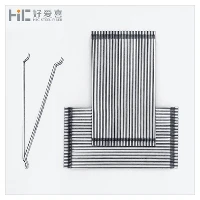
On the other hand, steel fibers are small, discrete pieces of steel that are randomly dispersed throughout the concrete mix. They can be made from different types of steel, such as carbon steel or stainless steel, and come in various shapes and sizes. Steel fibers for concrete floors are designed to enhance the mechanical properties of the concrete, including its tensile, flexural, and impact strength.
Advantages of Using Steel Fiber in Concrete Floors
1. Improved Crack Resistance
One of the significant advantages of using steel fiber is its ability to control cracking. When a concrete floor is under stress, the steel fibers act as a reinforcement mechanism at the micro - level. They bridge the cracks as they start to form, preventing them from propagating and growing into larger, more significant cracks. This is especially important in industrial and commercial floors where even small cracks can lead to water infiltration, damage to the floor finish, and reduced durability. For example, in a warehouse floor with heavy forklift traffic, steel fibers can help maintain the integrity of the floor surface over time. You can find high - quality Concrete Floor Steel Fiber that offers excellent crack - resistance properties.
2. Ease of Installation
Installing rebar requires careful placement and tying in a grid pattern, which can be time - consuming and labor - intensive. In contrast, steel fibers are simply added to the concrete mix during the batching process. This eliminates the need for complex formwork and reinforcement installation procedures. It also reduces the overall construction time, allowing projects to be completed more quickly. For large - scale floor projects, such as airport aprons or large shopping mall floors, the time saved in installation can result in significant cost savings.
3. Enhanced Durability
Steel fibers can improve the durability of concrete floors in several ways. They increase the impact resistance of the concrete, making it more resistant to damage from heavy objects being dropped or dragged across the floor. Additionally, steel fibers can enhance the abrasion resistance of the concrete, which is crucial in high - traffic areas. Our High Tensile Strength Glued Steel Fiber is specifically designed to provide long - lasting durability to concrete floors.
4. Uniform Reinforcement
Unlike rebar, which is placed in a grid pattern, steel fibers are randomly distributed throughout the concrete. This results in a more uniform reinforcement of the concrete matrix. As a result, the concrete floor has consistent strength properties in all directions, reducing the risk of localized weak points.
Limitations of Using Steel Fiber
1. Limited Structural Reinforcement for Large - Scale Projects
While steel fibers can significantly improve the properties of concrete floors, they may not be sufficient for large - scale structural applications where high - level structural reinforcement is required. In some cases, such as in high - rise building foundations or large bridges, rebar is still the preferred choice because it can provide the necessary load - bearing capacity and structural integrity.
2. Surface Finish Concerns
In some cases, the presence of steel fibers near the surface of the concrete floor can affect the surface finish. If not properly finished, the fibers may protrude from the surface, which can be a safety hazard and also affect the aesthetic appearance of the floor. However, with proper finishing techniques and the use of appropriate fiber types, such as Small Rebound Glued Steel Fiber, these issues can be minimized.
When Can Steel Fiber Replace Rebar?
1. Light - to - Medium - Load Floors
For light - to - medium - load floors, such as residential garages, small workshops, and some retail store floors, steel fiber can be a suitable replacement for rebar. These floors do not require the high - level structural reinforcement provided by rebar, and the benefits of steel fiber, such as crack resistance and ease of installation, can be fully utilized.
2. Areas with Complex Shapes
In areas where the floor has complex shapes or curves, installing rebar can be extremely difficult. Steel fiber, on the other hand, can be used easily in these situations as it fills the entire volume of the concrete without the need for special placement. For example, in a curved entrance ramp or a floor with irregular shapes in a modern architectural building, steel fiber can provide an effective reinforcement solution.
Conclusion
In conclusion, while steel fiber cannot completely replace rebar in all concrete floor applications, it can be a viable alternative in many situations. The decision to use steel fiber or rebar depends on several factors, including the load requirements, the size and shape of the floor, and the project budget and timeline. As a supplier of Steel Fiber for Concrete Floor, I believe that steel fiber offers many advantages, especially in terms of crack resistance, ease of installation, and durability.
If you are considering using steel fiber in your next concrete floor project, I encourage you to contact us for more information. We can provide you with detailed technical specifications, product samples, and guidance on the best steel fiber solution for your specific needs. Whether you are a contractor, an architect, or a property owner, we are here to help you make the right choice for your concrete floor reinforcement.
References
- ACI 544.1R - 96, "Report on the Use of Steel Fibers in Concrete, Mortar, and Shotcrete"
- Neville, A. M. (1996). Properties of Concrete. Pearson Education.
- Malhotra, V. M., & Carino, N. J. (2003). Concrete Technology: Properties, Mixture Design, and Applications. CRC Press.