


Can steel fiber be used in concrete floors with under - floor heating systems?
As a supplier of Concrete Floor Steel Fiber, I often encounter inquiries regarding the compatibility of steel fiber with various concrete applications, especially in floors equipped with under - floor heating systems. This topic is crucial as it combines the benefits of both steel - reinforced concrete and the comfort of under - floor heating. In this blog, I'll delve into the technical aspects, advantages, and considerations of using steel fiber in such concrete floors.
Technical Feasibility
Steel fiber has been proven to enhance the mechanical properties of concrete. When added to the concrete mix, it distributes randomly and acts as a reinforcement, improving the concrete's tensile strength, crack resistance, and impact resistance. In the context of under - floor heating systems, these properties are highly desirable.
Under - floor heating systems typically involve pipes or electric cables embedded within the concrete floor. As the system heats up and cools down, the concrete experiences thermal expansion and contraction. This cyclic movement can lead to the formation of cracks in the concrete. Steel fiber helps to mitigate this issue by bridging the cracks and preventing them from propagating.
Moreover, steel fiber can improve the overall durability of the concrete floor. In a floor with an under - floor heating system, the concrete is exposed to repeated temperature changes, which can accelerate the deterioration process. The addition of steel fiber enhances the concrete's resistance to wear and tear, making it more suitable for long - term use in such environments.
Advantages of Using Steel Fiber in Under - Floor Heating Concrete Floors
- Enhanced Crack Resistance
The primary advantage of using steel fiber in under - floor heating concrete floors is the significant improvement in crack resistance. Cracks in a concrete floor can not only compromise the structural integrity but also damage the under - floor heating system. Steel fiber acts as a barrier, preventing cracks from spreading and maintaining the integrity of the floor. - Improved Thermal Conductivity
Steel is a good conductor of heat. When steel fiber is added to the concrete, it can enhance the thermal conductivity of the floor. This means that the heat from the under - floor heating system can be more efficiently transferred to the surface of the floor, resulting in better heating performance and potentially lower energy consumption. - Reduced Shrinkage
Concrete shrinkage is a common problem, especially during the curing process. In a floor with an under - floor heating system, the additional heat can exacerbate this issue. Steel fiber helps to reduce shrinkage by providing internal reinforcement, which counteracts the forces that cause shrinkage. This leads to a more stable and flat floor surface. - Increased Load - Bearing Capacity
Under - floor heating floors may be subject to various loads, such as furniture, foot traffic, and equipment. Steel fiber - reinforced concrete has a higher load - bearing capacity compared to plain concrete. This means that the floor can better withstand these loads without cracking or deforming.
Types of Steel Fiber Suitable for Under - Floor Heating Concrete Floors
There are several types of steel fiber available on the market, and each has its own characteristics. For under - floor heating concrete floors, the following types are commonly used:
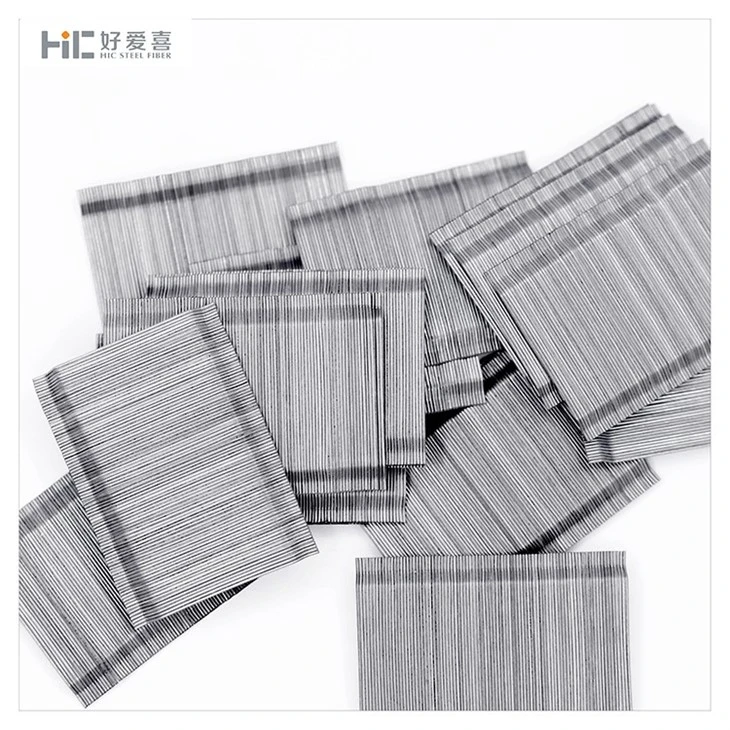
- Glued Type Steel Fiber
Glued type steel fiber is pre - bundled with a water - soluble adhesive. This makes it easier to disperse evenly in the concrete mix. When the concrete is mixed, the adhesive dissolves, and the fibers separate and distribute randomly throughout the concrete. The even distribution of fibers ensures consistent reinforcement and improved performance. - SFRC Steel Fiber
SFRC (Steel Fiber Reinforced Concrete) steel fiber is specifically designed for use in concrete. It has a high aspect ratio (length to diameter ratio), which provides excellent reinforcement properties. SFRC steel fiber can significantly enhance the tensile strength and crack resistance of the concrete, making it an ideal choice for under - floor heating floors. - Glued Type Steel Fiber for Mining
Although originally designed for mining applications, glued type steel fiber for mining can also be used in under - floor heating concrete floors. It has high strength and good corrosion resistance, which are important properties for a floor that is exposed to temperature changes and potential moisture.
Considerations When Using Steel Fiber in Under - Floor Heating Concrete Floors
- Fiber Dosage
The dosage of steel fiber in the concrete mix is crucial. Too little fiber may not provide sufficient reinforcement, while too much fiber can lead to problems such as balling and poor workability. It is important to determine the appropriate fiber dosage based on the specific requirements of the project, such as the size of the floor, the expected loads, and the type of under - floor heating system. - Mixing Process
Proper mixing is essential to ensure the even distribution of steel fiber in the concrete. The mixing process should be carefully controlled to prevent fiber balling. It is recommended to add the steel fiber gradually during the mixing process and to use a high - speed mixer to ensure thorough dispersion. - Corrosion Protection
Although steel fiber is generally resistant to corrosion, in a moist environment, there is still a risk of corrosion. In under - floor heating systems, where there may be some moisture due to condensation, it is important to take appropriate corrosion protection measures. This can include using corrosion - resistant steel fiber or applying a protective coating to the concrete surface.
Conclusion
In conclusion, steel fiber can be effectively used in concrete floors with under - floor heating systems. It offers numerous advantages, including enhanced crack resistance, improved thermal conductivity, reduced shrinkage, and increased load - bearing capacity. However, it is important to carefully consider factors such as fiber dosage, mixing process, and corrosion protection to ensure the optimal performance of the floor.

If you are considering using steel fiber in your under - floor heating concrete floor project, I encourage you to reach out to us. As a leading supplier of Concrete Floor Steel Fiber, we have the expertise and high - quality products to meet your specific needs. Contact us to discuss your project requirements and explore the best solutions for your under - floor heating concrete floor.
References
- ACI Committee 544. “State - of - the - Art Report on Fiber - Reinforced Concrete.” American Concrete Institute, 1996.
- Naaman, A. E., and Reinhardt, H. W. “Fiber - Reinforced Concrete: Design and Applications.” Taylor & Francis, 2003.
- Mindess, S., Young, J. F., and Darwin, D. “Concrete.” Prentice Hall, 2003.