



Hey there! As a supplier of Concrete Floor Steel Fiber, I often get asked a bunch of questions about using steel fibers in different concrete applications. One question that pops up quite a bit is, "Can steel fiber be used in concrete floors with a rough texture?" Well, let's dive right into it and find out.
Understanding Rough - Textured Concrete Floors
First off, what exactly are rough - textured concrete floors? These are floors that have a non - smooth surface. They can be created for various reasons. Maybe it's for safety purposes, like in areas where slip resistance is crucial, such as industrial facilities, ramps, or pool decks. Or perhaps it's for aesthetic reasons, to give a more rustic or natural look to a space, like in some modern architectural designs.
Rough - textured floors are typically made by either troweling the concrete in a way that leaves ridges or by using additives that change the surface finish. Sometimes, they're even created by exposing the aggregate on the surface during the finishing process.
The Role of Steel Fibers in Concrete
Steel fibers have been around in the concrete industry for a while now, and they bring a whole bunch of benefits to the table. When you add steel fibers to concrete, they act like tiny reinforcement bars, spreading throughout the concrete matrix. This helps to improve the concrete's mechanical properties in several ways.
One of the main advantages is that steel fibers enhance the concrete's toughness. They can resist cracking and help the concrete to hold together even when it's under stress. This is especially important in floors because they're constantly subjected to loads from foot traffic, machinery, and other sources.
Steel fibers also improve the concrete's impact resistance. If something heavy is dropped on the floor, the fibers can absorb the energy and prevent the concrete from shattering or developing large cracks. And they can enhance the fatigue resistance of the concrete, which means the floor can withstand repeated loading over time without failing.
Using Steel Fiber in Rough - Textured Concrete Floors
Now, back to our main question: Can steel fiber be used in concrete floors with a rough texture? The answer is a big yes! In fact, steel fibers can be a great addition to rough - textured concrete floors.
Cracking Resistance
Rough - textured floors are often more prone to cracking than smooth floors. The uneven surface can create stress concentrations, and any movement in the substrate can cause cracks to form. Steel fibers can help to prevent these cracks from propagating. They act as a barrier, bridging the gaps between the cracks and keeping the concrete intact.
For example, in an industrial facility with a rough - textured floor, the constant movement of heavy machinery can put a lot of stress on the concrete. Without steel fibers, cracks could start to appear, which could lead to safety hazards and costly repairs. But when steel fibers are added, they can keep the floor in good condition for a longer time.
Impact and Fatigue Resistance
As I mentioned earlier, rough - textured floors are likely to experience more impacts and repeated loading. Steel fibers can significantly improve the floor's ability to handle these conditions. Whether it's a forklift driving over the floor or people walking on it all day, the steel fibers can ensure that the floor remains durable and long - lasting.
Surface Finish
Some people might be worried that adding steel fibers could affect the rough texture of the floor. But in most cases, this isn't a problem. The fibers are usually well - dispersed throughout the concrete, and they don't interfere with the finishing process. You can still achieve the desired rough texture using the same techniques you would with regular concrete.
Types of Steel Fibers for Rough - Textured Concrete Floors
There are different types of steel fibers available, and some are better suited for rough - textured concrete floors than others.
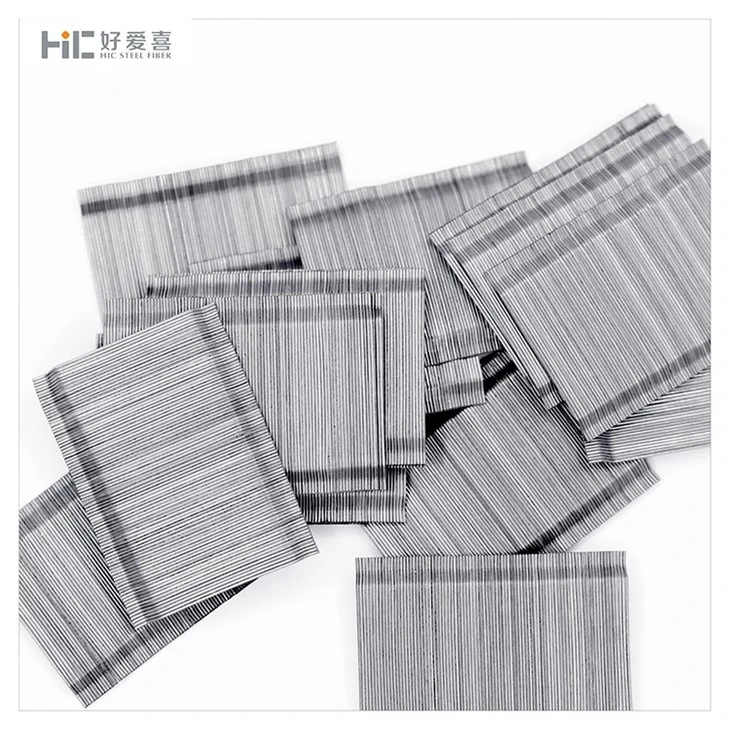
Easy Disperse Glued Type Steel Fiber
The Easy Disperse Glued Type Steel Fiber is a great option. These fibers are designed to disperse easily in the concrete, which ensures a more uniform distribution. This is important because a uniform distribution of fibers means better overall performance of the concrete. They can provide consistent reinforcement throughout the floor, improving its cracking resistance and other properties.
SFRC Steel Fiber
SFRC Steel Fiber is another popular choice. SFRC stands for Steel Fiber Reinforced Concrete, and these fibers are specifically engineered to enhance the performance of concrete. They come in different shapes and sizes, and you can choose the ones that are most suitable for your rough - textured floor project. For example, if you need a floor with high impact resistance, you might opt for fibers with a particular shape that can better absorb energy.
High Density Glued Type Steel Fiber
The High Density Glued Type Steel Fiber is also a good option. As the name suggests, these fibers are densely packed, which can provide extra reinforcement to the concrete. They can be especially useful in rough - textured floors that are expected to bear heavy loads.
Considerations When Using Steel Fiber in Rough - Textured Concrete Floors
While steel fibers are a great addition to rough - textured concrete floors, there are a few things to keep in mind.
Mixing
Proper mixing is crucial when adding steel fibers to concrete. You need to make sure that the fibers are evenly distributed throughout the concrete. If the fibers clump together, it can lead to weak spots in the floor. So, it's important to follow the manufacturer's instructions for mixing the fibers into the concrete.
Dosage
The amount of steel fiber you use is also important. Using too few fibers might not provide enough reinforcement, while using too many can make the concrete difficult to work with and might even affect its performance. You should consult with a concrete expert or follow the guidelines provided by the steel fiber manufacturer to determine the right dosage for your project.

Finishing
When finishing a rough - textured floor with steel fibers, you need to be careful not to expose the fibers on the surface. If the fibers stick out, it can create a safety hazard and might also affect the appearance of the floor. Make sure to use the appropriate finishing tools and techniques to achieve the desired rough texture without exposing the fibers.
Conclusion
In conclusion, steel fibers can definitely be used in concrete floors with a rough texture, and they offer a whole bunch of benefits. They can improve the cracking resistance, impact resistance, and fatigue resistance of the floor, making it more durable and long - lasting.
If you're thinking about using steel fibers in your next rough - textured concrete floor project, we've got a great range of products to choose from, including the Easy Disperse Glued Type Steel Fiber, SFRC Steel Fiber, and High Density Glued Type Steel Fiber.
If you have any questions or want to discuss your specific project needs, don't hesitate to reach out. We're here to help you make the best decision for your concrete floor. Let's work together to create a high - quality, durable rough - textured concrete floor that meets your requirements.
References
- ACI 544.1R - 96, "State - of - the - Art Report on Fiber - Reinforced Concrete"
- Neville, A.M., "Properties of Concrete", Pearson Education, 2011.
- Naaman, A.E., "Fiber - Reinforced Concrete: Fundamentals and Applications", CRC Press, 2008.