



Phosphate-based concrete, renowned for its rapid-setting properties, high early strength, and excellent bond strength, has found wide applications in various construction projects such as urgent repairs, industrial flooring, and precast elements. On the other hand, micro steel fibers, especially the Rpc Micro Steel Fiber we supply, are well - known for enhancing the mechanical properties of concrete. But the question remains: Can Rpc Micro Steel Fiber be used in phosphate - based concrete? In this blog, we will explore this topic from multiple aspects.
Compatibility of Rpc Micro Steel Fiber and Phosphate - Based Concrete
The first concern when considering the use of Rpc Micro Steel Fiber in phosphate - based concrete is their compatibility. Phosphate - based concrete has a unique chemistry during the hydration process. The phosphate ions react with alkaline components in the concrete to form a series of complex compounds, which lead to the rapid setting and hardening of the concrete.
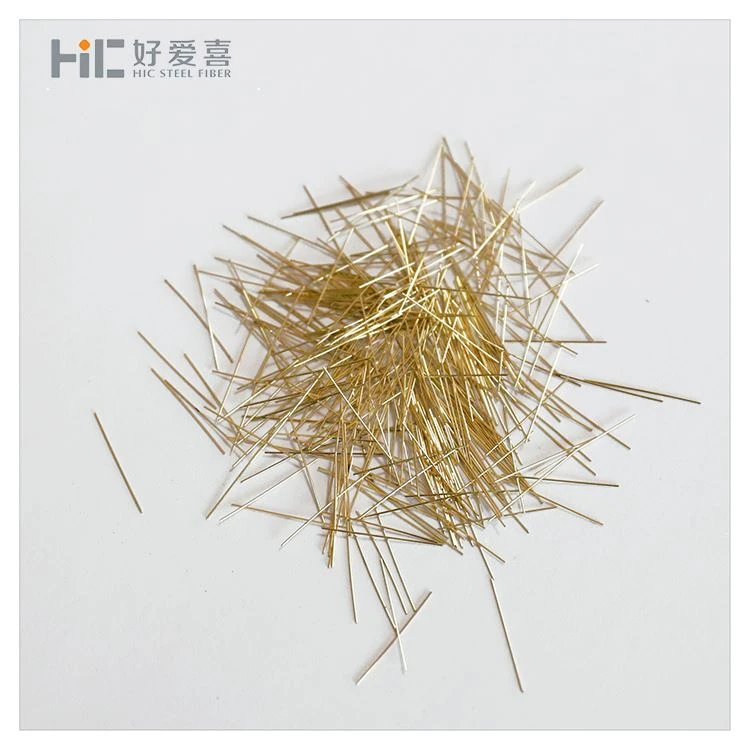
Rpc Micro Steel Fiber is made of high - quality steel with a special copper - plating treatment in most cases. Our Copper Coated Type Steel Fiber and Copper Micro Steel Fiber have similar copper - based features like the Rpc Micro Steel Fiber. The copper coating on the steel fiber not only provides good corrosion resistance but also has a certain chemical inertness in the alkaline environment of concrete.
In the phosphate - based concrete, the initial high - pH environment might cause partial dissolution of the copper coating if the coating is not thick enough or the concrete is too alkaline. However, our Rpc Micro Steel Fiber is designed with an appropriate copper - plating thickness to ensure that it can withstand the chemical attack during the early stage of phosphate - based concrete hydration. The small diameter and high aspect ratio of Rpc Micro Steel Fiber also allow it to better disperse in the concrete matrix, which minimizes the potential chemical interaction between the fiber and the concrete compared to larger - sized fibers.
Improvement of Mechanical Properties
When added to phosphate - based concrete, Rpc Micro Steel Fiber can significantly improve its mechanical properties.
-
Flexural Strength
Phosphate - based concrete alone has a relatively low flexural strength compared to its compressive strength. By adding Rpc Micro Steel Fiber, the fibers act as bridges across cracks. When a flexural load is applied, the fibers prevent crack propagation by transferring stress from the cracked section to the intact part of the concrete. This increases the ductility of the concrete and enhances its flexural strength. For example, in some laboratory tests, the addition of 1 - 2% of Rpc Micro Steel Fiber by volume can increase the flexural strength of phosphate - based concrete by 30 - 50%. -
Tensile Strength
Tensile strength is another area where Rpc Micro Steel Fiber makes a difference. Phosphate - based concrete is weak in tension due to its brittle nature. The randomly distributed Rpc Micro Steel Fiber in the concrete matrix can effectively resist tensile forces. The fiber - concrete bond is crucial in this case. The copper - plating on our Rpc Micro Steel Fiber can improve the bond strength between the fiber and the phosphate - based concrete matrix, which enhances the overall tensile capacity of the composite material. -
Impact Resistance
In applications where the concrete is subjected to impact loads, such as in industrial floors or pavements, the addition of Rpc Micro Steel Fiber can enhance the impact resistance of phosphate - based concrete. The fibers absorb and disperse the energy generated by the impact, reducing the formation and growth of cracks. This means that the phosphate - based concrete with Rpc Micro Steel Fiber can better withstand sudden impacts and repeated loads.
Workability Considerations
The workability of phosphate - based concrete is an important factor in construction. The addition of Rpc Micro Steel Fiber can have both positive and negative effects on workability.
On one hand, the micro - scale size of Rpc Micro Steel Fiber allows for a more uniform dispersion in the concrete mix, which can sometimes lead to a more homogeneous and workable mixture compared to larger - sized steel fibers. The small diameter of the fiber reduces the likelihood of balling and clogging of the mixer or the placing equipment.

On the other hand, with an increase in the fiber dosage, the workability of the phosphate - based concrete may decrease. This is because the fibers increase the internal friction of the concrete mixture. To address this issue, appropriate super - plasticizers can be added to the mix. These admixtures can reduce the water - cement ratio while maintaining the workability of the concrete, and they can also improve the dispersion of the Rpc Micro Steel Fiber in the matrix.
Durability Enhancement
Durability is a key factor in the long - term performance of concrete structures. In phosphate - based concrete, Rpc Micro Steel Fiber can enhance durability in several ways.
-
Corrosion Resistance
The copper - plating on Rpc Micro Steel Fiber provides a certain level of corrosion protection. In an aggressive environment, such as where the phosphate - based concrete is exposed to chemicals or moisture, the copper coating can act as a barrier to prevent the steel core from rusting. This is especially important as rusting of steel fibers can lead to expansion and cracking of the concrete, reducing its service life. -
Crack Control
As mentioned earlier, Rpc Micro Steel Fiber can effectively control crack propagation. By minimizing the size and number of cracks in the phosphate - based concrete, it reduces the ingress of water, oxygen, and other harmful substances. This helps to protect the concrete matrix from chemical attacks and freeze - thaw damage, thereby improving the overall durability of the structure.
Case Studies
Although there is a relatively limited number of large - scale case studies specifically on the use of Rpc Micro Steel Fiber in phosphate - based concrete, some small - scale projects and laboratory research have shown promising results.
In a laboratory - based repair project, a damaged phosphate - based concrete structure was repaired using a mixture of phosphate - based concrete and Rpc Micro Steel Fiber. After a certain period of curing, the repaired area showed higher strength and better crack resistance compared to the nearby unrepaired areas.
In precast element production, the addition of Rpc Micro Steel Fiber to phosphate - based concrete has been found to improve the quality and performance of the precast units. The units are easier to handle during transportation and installation due to their enhanced mechanical properties.
Conclusion
In conclusion, Rpc Micro Steel Fiber can indeed be used in phosphate - based concrete. The unique properties of Rpc Micro Steel Fiber, including its copper - plating, small diameter, and high aspect ratio, make it compatible with phosphate - based concrete. It can significantly enhance the mechanical properties, workability (when properly managed), and durability of the concrete.
As a leading supplier of Rpc Micro Steel Fiber, we are committed to providing high - quality products to meet the diverse needs of the construction industry. If you are interested in using Rpc Micro Steel Fiber in your phosphate - based concrete projects or want to learn more about our products, we encourage you to contact us for procurement and in - depth technical discussions.
References
- Neville, A. M. (1995). Properties of Concrete. Pearson Education.
- Mindess, S., Young, J. F., & Darwin, D. (2003). Concrete. Prentice Hall.
- Relevant research papers on the integration of micro steel fibers in special - type concretes from various academic journals.