


Can low carbon steel fiber be used in tunnel concrete?
As a supplier of low carbon steel fiber, I often encounter inquiries from construction professionals regarding the suitability of our product for various applications, especially in tunnel concrete. In this blog post, I will delve into the feasibility and advantages of using low carbon steel fiber in tunnel concrete, providing insights based on scientific research and practical experience.
Understanding Low Carbon Steel Fiber
Low carbon steel fiber is a type of reinforcement material made from low carbon steel. It is typically produced by cutting or shearing steel wires into short, discrete fibers. These fibers are then added to concrete to enhance its mechanical properties, such as tensile strength, flexural strength, and toughness.
One of the key advantages of low carbon steel fiber is its high strength-to-weight ratio. Compared to traditional reinforcement materials like steel bars, low carbon steel fiber can provide significant reinforcement with a relatively small amount of material. This not only reduces the weight of the concrete structure but also makes it more cost-effective.
Another advantage of low carbon steel fiber is its ability to improve the durability of concrete. By distributing uniformly throughout the concrete matrix, the fibers can help to control cracking and prevent the propagation of cracks. This is particularly important in tunnel structures, where cracks can lead to water ingress, corrosion of reinforcement, and ultimately, structural failure.
Feasibility of Using Low Carbon Steel Fiber in Tunnel Concrete
The use of low carbon steel fiber in tunnel concrete has been extensively studied and proven to be feasible. In fact, many tunnel projects around the world have successfully incorporated low carbon steel fiber into their concrete structures.
One of the main factors that make low carbon steel fiber suitable for tunnel concrete is its ability to improve the ductility of the concrete. In tunnel construction, the concrete is often subjected to high stresses and strains due to the weight of the overlying soil and the traffic loads. By adding low carbon steel fiber to the concrete, the ductility of the concrete can be significantly improved, allowing it to withstand these stresses and strains without cracking or failing.
Another factor that makes low carbon steel fiber suitable for tunnel concrete is its ability to enhance the fire resistance of the concrete. In the event of a fire in a tunnel, the concrete structure needs to maintain its integrity for a certain period of time to allow for the safe evacuation of passengers and the suppression of the fire. Low carbon steel fiber can help to improve the fire resistance of the concrete by reducing the spalling and cracking that can occur during a fire.
In addition to its mechanical and fire-resistant properties, low carbon steel fiber can also improve the workability of the concrete. By adding the fibers to the concrete mix, the viscosity of the concrete can be increased, making it easier to pump and place. This is particularly important in tunnel construction, where the concrete needs to be placed in narrow and confined spaces.
Types of Low Carbon Steel Fiber for Tunnel Concrete
There are several types of low carbon steel fiber that can be used in tunnel concrete, each with its own unique properties and advantages. Some of the most common types of low carbon steel fiber for tunnel concrete include:
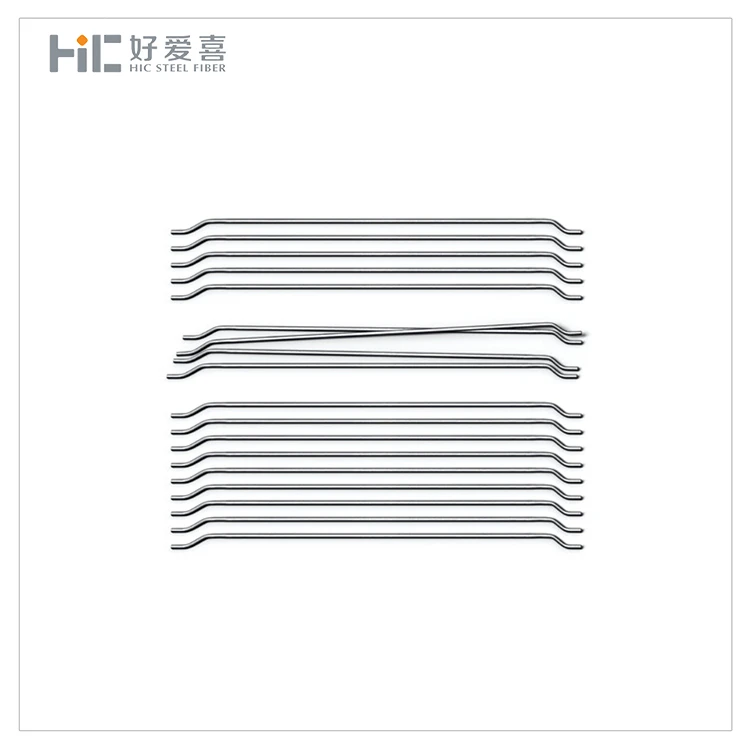
- Hooked End Steel Fibers: Hooked End Steel Fibers are one of the most widely used types of low carbon steel fiber for tunnel concrete. The hooked ends of the fibers provide a mechanical interlock with the concrete matrix, which helps to improve the bond between the fibers and the concrete. This results in improved tensile and flexural strength, as well as better crack control.
- Wear Resistant Hooked End Steel Fiber: Wear Resistant Hooked End Steel Fiber is a special type of hooked end steel fiber that is designed to provide enhanced wear resistance. This type of fiber is particularly suitable for tunnel concrete that is subjected to high levels of abrasion, such as in tunnels with heavy traffic or in areas where there is a lot of construction activity.
- Steel Fiber for Shotcrete: Steel Fiber for Shotcrete is a type of low carbon steel fiber that is specifically designed for use in shotcrete applications. Shotcrete is a construction technique in which concrete is sprayed onto a surface using a high-pressure nozzle. Steel fiber for shotcrete can help to improve the strength and durability of the shotcrete, as well as its adhesion to the substrate.
Case Studies of Low Carbon Steel Fiber in Tunnel Concrete
To illustrate the effectiveness of low carbon steel fiber in tunnel concrete, let's take a look at some real-world case studies.
-
Case Study 1: The Channel Tunnel
The Channel Tunnel, which connects the United Kingdom and France, is one of the most famous tunnel projects in the world. The tunnel was constructed using a combination of precast concrete segments and in-situ concrete lining. To improve the durability and performance of the concrete lining, low carbon steel fiber was added to the concrete mix. The use of low carbon steel fiber helped to control cracking and prevent the propagation of cracks, which has ensured the long-term integrity of the tunnel structure. -
Case Study 2: The Tokyo Bay Aqua-Line
The Tokyo Bay Aqua-Line is a toll road that crosses Tokyo Bay in Japan. The tunnel section of the Aqua-Line is one of the longest underwater tunnels in the world. To ensure the safety and durability of the tunnel structure, low carbon steel fiber was used in the concrete lining. The use of low carbon steel fiber helped to improve the ductility and fire resistance of the concrete, as well as its resistance to water ingress and corrosion.
Conclusion
In conclusion, low carbon steel fiber can be effectively used in tunnel concrete to improve its mechanical properties, durability, and fire resistance. The use of low carbon steel fiber in tunnel construction has been proven to be feasible and has been successfully implemented in many tunnel projects around the world.
As a supplier of low carbon steel fiber, we are committed to providing high-quality products and technical support to our customers. If you are considering using low carbon steel fiber in your tunnel project, we would be happy to discuss your specific requirements and provide you with a customized solution. Please feel free to contact us to start a conversation about your procurement needs.

References
- ACI Committee 544. (1996). Fiber-Reinforced Concrete. American Concrete Institute.
- Naaman, A. E., & Reinhardt, H. W. (2003). Fibre-Reinforced Concrete: Design and Applications. E & FN Spon.
- RILEM Technical Committee 224-FRC. (2013). State-of-the-Art Report on Fibre-Reinforced Concrete. RILEM Publications SARL.