


Hey there! As a supplier of low carbon steel fiber, I often get asked if it can be used in marine concrete. Well, let's dive right into this topic and find out.
First off, what's marine concrete? It's the concrete used in structures like piers, docks, offshore platforms, and seawalls. These structures are constantly exposed to harsh marine environments, including saltwater, waves, and tidal changes. So, the concrete needs to be tough and durable to withstand these conditions.
Now, let's talk about low carbon steel fiber. Low carbon steel fiber is made from low - carbon steel, which is known for its good ductility and relatively low cost. It has a lot of potential benefits when it comes to concrete reinforcement.
One of the main advantages of using low carbon steel fiber in marine concrete is its ability to enhance the mechanical properties. Adding steel fibers to concrete can increase its tensile strength, flexural strength, and toughness. In a marine environment, where the concrete is subjected to dynamic loads from waves and ships, this extra strength can be a game - changer. For example, when a large wave hits a seawall, the steel fibers help to distribute the stress more evenly throughout the concrete, reducing the risk of cracking.
Another benefit is crack control. Cracks in marine concrete can be a big problem because they allow saltwater to penetrate into the concrete, which can lead to corrosion of the reinforcement bars. Low carbon steel fibers can act as a barrier to crack propagation. They bridge the cracks and prevent them from growing larger. This helps to keep the concrete structure intact and reduces the long - term maintenance costs.
But, there are also some concerns when using low carbon steel fiber in marine concrete. The biggest one is corrosion. Saltwater is highly corrosive, and if the steel fibers corrode, it can weaken the concrete structure. However, modern low carbon steel fibers can be treated to improve their corrosion resistance. For instance, they can be coated with a protective layer, such as epoxy or zinc. These coatings create a barrier between the steel fiber and the saltwater, reducing the risk of corrosion.
Let's take a look at some of the specific types of low carbon steel fibers that can be used in marine concrete. One popular type is the Hooked End Steel Fiber. The hooked ends of these fibers provide better anchorage in the concrete, which enhances the bonding between the fibers and the concrete matrix. This results in better performance in terms of strength and crack control.
The High Density Hooked End Steel Fiber is another option. As the name suggests, it has a higher density of fibers, which means more reinforcement in the concrete. This can be particularly useful in high - stress areas of marine structures, such as the base of a pier where the load is concentrated.
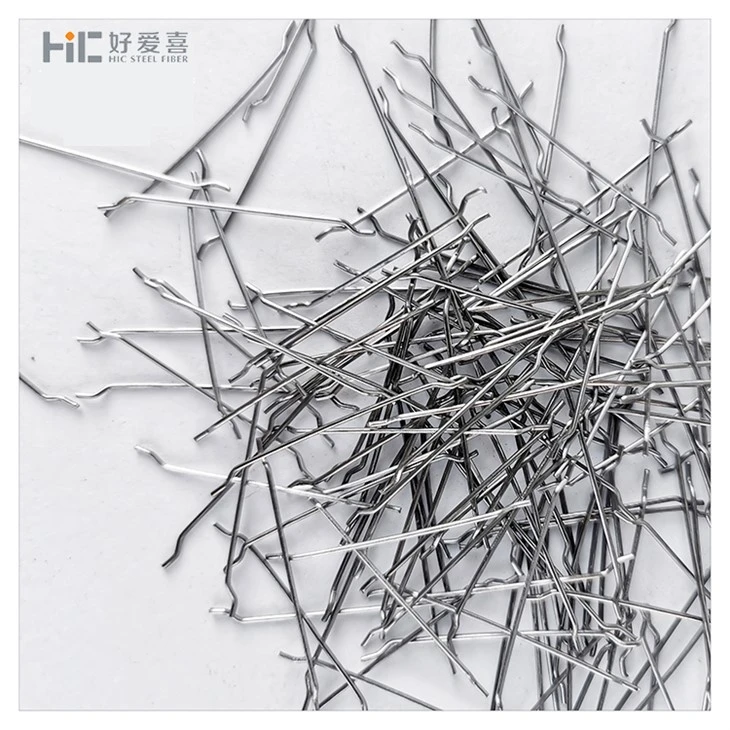

The Diameter Matching Hooked End Steel Fiber is designed to have a diameter that is well - matched to the aggregate size in the concrete. This ensures a more uniform distribution of the fibers in the concrete, leading to more consistent performance.
In addition to the types of fibers, the dosage of the steel fibers also matters. The right dosage depends on various factors, such as the type of marine structure, the expected loads, and the environmental conditions. Generally, a dosage of 20 - 80 kg per cubic meter of concrete is common, but this can be adjusted based on the specific requirements.
When it comes to mixing low carbon steel fiber with marine concrete, it's important to follow the proper procedures. The fibers should be added to the concrete during the mixing process. It's crucial to ensure that the fibers are evenly distributed throughout the concrete. This can be achieved by using a high - speed mixer or a special mixing device.
Now, let's talk about some real - world examples. There have been many successful projects where low carbon steel fiber has been used in marine concrete. For example, in some coastal bridge construction projects, the use of steel fibers has significantly improved the durability and service life of the bridge decks. The reduced cracking and increased strength have made these bridges more resistant to the harsh marine environment.
In conclusion, low carbon steel fiber can definitely be used in marine concrete. It offers many benefits in terms of enhancing the mechanical properties and controlling cracks. While corrosion is a concern, it can be mitigated through proper treatment of the fibers. With the right type of fiber, dosage, and mixing procedures, low carbon steel fiber can be a valuable addition to marine concrete structures.
If you're involved in a marine construction project and are considering using low carbon steel fiber in your concrete, I'd love to have a chat with you. We can discuss your specific needs and find the best solution for your project. Whether it's the Hooked End Steel Fiber, High Density Hooked End Steel Fiber, or Diameter Matching Hooked End Steel Fiber, we've got you covered. So, don't hesitate to reach out and start the conversation about how we can work together to make your marine project a success.
References
- "Fiber - Reinforced Concrete: State - of - the - Art Report", ACI Committee 544
- "Concrete in Marine Environments", Elsevier
- "Steel Fibers in Concrete Structures: Design, Construction, and Performance", CRC Press