


As a supplier of loose hooked end steel fiber, I've often been asked about its suitability for tunnel linings. In this blog, I'll explore the potential of loose hooked end steel fiber in tunnel lining applications, drawing on scientific research and industry experience.
The Basics of Loose Hooked End Steel Fiber
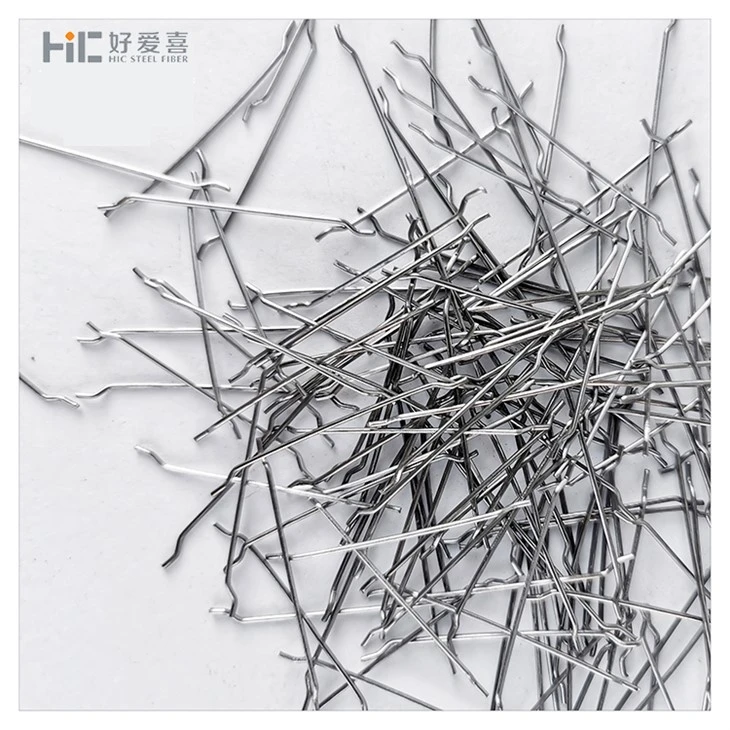
Loose hooked end steel fiber is a type of reinforcement material made from high - strength steel. The hooked ends are designed to enhance the bond between the fiber and the concrete matrix. When added to concrete, these fibers distribute randomly, providing additional strength and toughness. They can be easily mixed into the concrete during the batching process, and their loose form allows for uniform dispersion throughout the mixture.
Advantages of Hooked End Steel Fiber in General
Hooked End Steel Fiber offers several benefits in concrete applications. Firstly, it significantly improves the crack resistance of concrete. Cracks in concrete structures can lead to water infiltration, corrosion of reinforcement bars, and ultimately, structural failure. The presence of hooked end steel fibers helps to arrest crack propagation by bridging the cracks and transferring stress across them.
Secondly, it enhances the impact and abrasion resistance of concrete. In environments where the concrete is subject to heavy traffic, impacts, or abrasive forces, such as in industrial floors or bridge decks, hooked end steel fibers can extend the service life of the structure.
Thirdly, it provides post - cracking ductility. Traditional concrete is brittle and loses its load - carrying capacity rapidly after cracking. Steel fibers, however, allow the concrete to continue to carry load even after cracks have formed, which is crucial for the safety and durability of structures.
Tunnel Linings: Requirements and Challenges
Tunnel linings serve several important functions. They provide structural support to the tunnel, prevent water and soil ingress, and protect the tunnel from environmental factors. Tunnel linings are subject to a variety of loads, including the weight of the overlying soil and rock, water pressure, and dynamic loads from traffic or seismic activity.
One of the main challenges in tunnel lining construction is achieving high - quality, durable concrete. The concrete must have sufficient strength to withstand the applied loads, good workability for proper placement, and long - term durability in the often - harsh tunnel environment. Additionally, the lining should be able to resist cracking, as cracks can compromise the integrity of the tunnel and lead to water leakage and corrosion of internal components.
Suitability of Loose Hooked End Steel Fiber for Tunnel Linings
Structural Performance
The use of High Density Hooked End Steel Fiber in tunnel linings can enhance the structural performance. Research has shown that steel - fiber - reinforced concrete (SFRC) can have higher flexural and tensile strengths compared to plain concrete. In a tunnel lining, this increased strength can help the structure better withstand the complex stress distributions caused by the overlying soil and rock.
For example, in tunnels located in areas with high seismic activity, the ductility provided by steel fibers can be crucial. During an earthquake, the tunnel lining may be subjected to large deformations. The steel fibers can help the concrete to deform in a more ductile manner, reducing the risk of sudden failure and collapse.
Crack Control
Crack control is of utmost importance in tunnel linings. Water leakage through cracks can cause damage to the tunnel's internal systems, such as electrical and ventilation systems, and can also lead to corrosion of any embedded reinforcement. Loose hooked end steel fibers can effectively control crack formation and propagation.
When cracks start to form in the concrete, the hooked ends of the steel fibers engage with the surrounding concrete matrix, creating a bridging effect. This bridging action restricts the opening of the cracks and distributes the stress more evenly, preventing the cracks from growing larger.
Durability
The durability of tunnel linings is a major concern. The concrete in tunnel linings is often exposed to aggressive environments, such as groundwater with high levels of sulfates or chlorides. Steel fibers can improve the durability of the concrete by reducing permeability. The fibers fill the voids in the concrete matrix, making it more difficult for water and aggressive chemicals to penetrate.
In addition, the enhanced abrasion resistance provided by steel fibers is beneficial in tunnels where the lining may be subject to wear and tear from traffic or maintenance activities.
Construction Considerations
From a construction perspective, loose hooked end steel fibers are easy to handle and mix with concrete. They can be added directly to the concrete mixer during the batching process, eliminating the need for complex installation procedures. This simplifies the construction process and reduces labor costs.
However, it is important to ensure proper mixing to achieve a uniform distribution of the fibers in the concrete. Improper mixing can result in fiber clumping, which can reduce the effectiveness of the reinforcement.
Case Studies
There have been several successful applications of hooked end steel fibers in tunnel linings around the world. In some European tunnels, SFRC with hooked end steel fibers has been used to improve the performance of the linings. These tunnels have shown better resistance to cracking and improved durability compared to tunnels lined with plain concrete.
In a large - scale tunnel project in Asia, Cold Drawn Steel Wire Fibre was used in the tunnel linings. The use of steel fibers not only enhanced the structural performance but also reduced the construction time by eliminating the need for traditional steel reinforcement cages in some sections.
Conclusion
In conclusion, loose hooked end steel fiber can be a valuable addition to tunnel linings. Its ability to improve crack resistance, enhance structural performance, and increase durability makes it well - suited for the demanding requirements of tunnel construction.

While there are some construction considerations, such as proper mixing, the benefits of using loose hooked end steel fibers far outweigh the challenges. As a supplier of loose hooked end steel fiber, I am confident in the product's ability to contribute to the long - term success of tunnel lining projects.
If you are involved in a tunnel lining project or are interested in learning more about the use of loose hooked end steel fiber, I encourage you to reach out for a detailed discussion. We can provide you with technical support, product samples, and pricing information to help you make an informed decision.
References
- ACI Committee 544. (2007). State - of - the - Art Report on Fiber - Reinforced Concrete. American Concrete Institute.
- Naaman, A. E., & Reinhardt, H. W. (1996). Fibre Reinforced Concrete: State of the Art Report. RILEM Technical Committee 144 - ADF.
- Banthia, N., & Sappakittipakorn, M. (2007). Fiber - Reinforced Concrete: A Review of its Material Properties and Applications. Cement and Concrete Composites, 29(6), 483 - 494.