



Can Hooked End Type Steel Fiber be used in fiber - reinforced polymer (FRP) composites?
Hey there! I'm a supplier of Hooked End Type Steel Fiber, and I've been getting a lot of questions lately about whether our hooked end type steel fiber can be used in fiber - reinforced polymer (FRP) composites. So, I thought I'd sit down and write this blog to share my thoughts and some research on the topic.
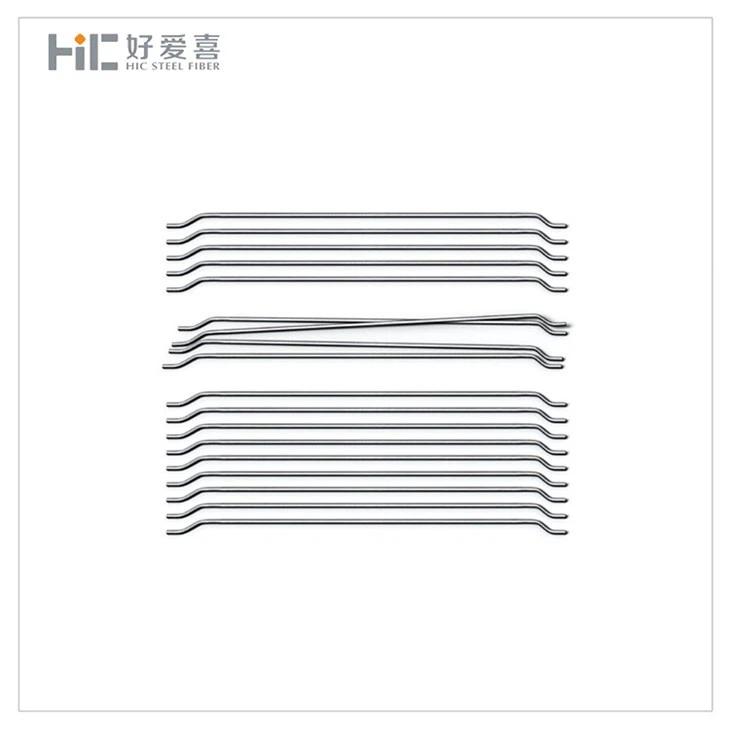
First off, let's talk a bit about what Hooked End Type Steel Fiber is. It's a type of steel fiber that has hooks at the ends. These hooks are super important because they help the fiber bond better with the surrounding material. When we're talking about concrete, for example, the hooked ends make the fiber "grab" onto the concrete, which improves the overall strength and durability of the concrete.
Now, FRP composites are a whole different ballgame. FRP stands for fiber - reinforced polymer, and it's a material made up of a polymer matrix (like epoxy or polyester) and reinforcing fibers (such as glass, carbon, or aramid). FRP composites are known for their high strength - to - weight ratio, corrosion resistance, and good fatigue properties. They're used in a wide range of applications, from aerospace to construction.
So, can our Hooked End Type Steel Fiber be used in FRP composites? Well, there are a few things to consider.
Advantages of Using Hooked End Type Steel Fiber in FRP Composites
One of the main advantages is the potential to improve the mechanical properties of the FRP composite. Steel fibers are strong and have good stiffness. When added to an FRP composite, they can increase the composite's tensile strength, flexural strength, and impact resistance. The hooked ends of the steel fiber can also help to transfer stress between the fiber and the polymer matrix more effectively, which can enhance the overall performance of the composite.
For example, in some construction applications where FRP composites are used for structural elements, adding Hooked End Type Steel Fiber could make the elements more resistant to cracking and failure under load. This could lead to longer - lasting and more reliable structures.
Another advantage is the cost. Steel is generally less expensive than some of the traditional reinforcing fibers used in FRP composites, like carbon fiber. By using Hooked End Type Steel Fiber, manufacturers could potentially reduce the cost of producing FRP composites without sacrificing too much in terms of performance. This could make FRP composites more accessible for a wider range of applications.

Challenges of Using Hooked End Type Steel Fiber in FRP Composites
However, there are also some challenges. One of the biggest challenges is the compatibility between the steel fiber and the polymer matrix. Steel is a metal, and polymers are organic materials. They have different chemical and physical properties, which can make it difficult for them to bond well together. If the bond between the steel fiber and the polymer matrix is weak, the fiber won't be able to effectively transfer stress, and the performance of the composite may not be as good as expected.
Corrosion is another issue. Steel is prone to rusting, especially in the presence of moisture and oxygen. In an FRP composite, if the steel fiber starts to corrode, it can expand and cause cracking in the polymer matrix. This can lead to a decrease in the composite's strength and durability over time. To overcome this, the steel fiber may need to be coated with a corrosion - resistant material, which adds to the cost and complexity of the manufacturing process.
Research and Applications
There has been some research on using steel fibers in FRP composites. Some studies have shown promising results. For example, in a research project on using steel fibers in glass fiber - reinforced polymer composites for bridge decks, it was found that the addition of steel fibers improved the flexural strength and impact resistance of the composite. However, more research is needed to fully understand the behavior of Hooked End Type Steel Fiber in FRP composites and to optimize the manufacturing process.
In terms of applications, there are already some industries that are exploring the use of steel - fiber - reinforced FRP composites. The automotive industry, for example, is always looking for ways to reduce the weight of vehicles while maintaining or improving their strength. Steel - fiber - reinforced FRP composites could potentially be used in car body panels or other structural components to achieve this goal.
Our Products
As a supplier of Hooked End Type Steel Fiber, we offer a variety of products that could potentially be used in FRP composites. Our High Strength Steel Fiber is made from high - quality steel and has excellent mechanical properties. It's designed to provide maximum reinforcement in different applications, including FRP composites.
We also have Steel Fiber for Commercial and Industrial Floor. Although it's mainly used for flooring applications, its hooked end design and high - strength characteristics could also be beneficial in FRP composites.
And our High Density Hooked End Steel Fiber is ideal for applications where a high concentration of steel fibers is required to achieve the desired mechanical properties.
Conclusion
In conclusion, while there are some challenges to using Hooked End Type Steel Fiber in FRP composites, there are also some significant advantages. With further research and development, it's possible that Hooked End Type Steel Fiber could become a valuable addition to the range of reinforcing materials used in FRP composites.
If you're interested in exploring the use of Hooked End Type Steel Fiber in your FRP composite applications, I'd love to have a chat with you. We can discuss your specific needs and see if our products are a good fit for your project. Whether you're a manufacturer, an engineer, or a researcher, we're here to help you find the right solution. Just reach out, and we can start a conversation about how our Hooked End Type Steel Fiber can benefit your work.
References
- [List of relevant research papers or industry reports related to steel fibers in FRP composites. For example, "Title of a research paper", Author, Journal Name, Publication Year]
- [Another reference, following the same format]