



Can hooked end steel fibers be used in concrete stairs? This is a question that many in the construction industry have pondered, and as a supplier of Hooked End Steel Fibers, I'm excited to explore this topic in-depth.
Understanding Hooked End Steel Fibers
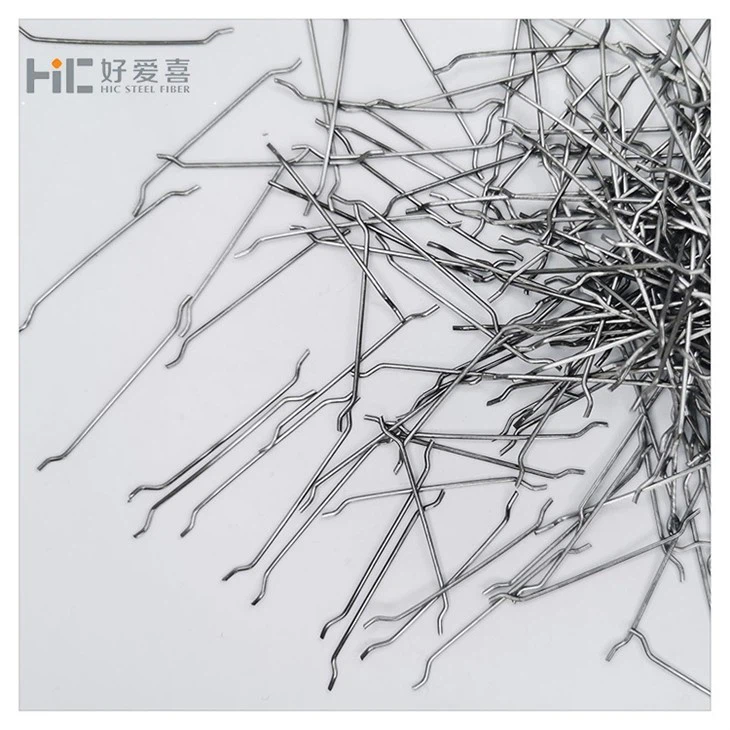
Hooked end steel fibers are a type of reinforcement material used in concrete. They are typically made from high - strength steel and are designed with hooked ends. These hooks enhance the bond between the fibers and the concrete matrix, providing improved mechanical properties. The fibers are randomly distributed throughout the concrete, which helps to control cracking, increase toughness, and improve the overall durability of the concrete structure.
Properties of Hooked End Steel Fibers
One of the key properties of hooked end steel fibers is their ability to resist cracking. When concrete is subjected to tensile forces, cracks can form. The presence of steel fibers helps to bridge these cracks, preventing them from propagating and growing larger. This is especially important in areas where the concrete is likely to experience significant stress, such as in stairs.
In addition to crack resistance, hooked end steel fibers also enhance the toughness of concrete. Toughness refers to the ability of the material to absorb energy before failure. By adding steel fibers to concrete, the material becomes more ductile and can withstand greater deformation without breaking. This is beneficial for stairs, as they are often subjected to dynamic loads from foot traffic, impacts, and vibrations.
Suitability for Concrete Stairs
Now, let's specifically address the question of whether hooked end steel fibers can be used in concrete stairs. The answer is a resounding yes. There are several reasons why hooked end steel fibers are an excellent choice for concrete stairs.
Crack Control
As mentioned earlier, stairs are prone to cracking due to the various loads they experience. The addition of hooked end steel fibers helps to control cracking, which is crucial for the long - term integrity of the stairs. Cracks in stairs can not only be unsightly but also pose a safety hazard. By reducing the likelihood of cracking, steel fibers contribute to a safer and more durable stair structure.
Impact Resistance
Stairs are constantly subjected to impacts from footsteps, dropped objects, and other sources. Hooked end steel fibers improve the impact resistance of concrete, allowing the stairs to better withstand these forces. This means that the stairs are less likely to suffer from damage such as chipping, spalling, or cracking under impact, which can extend their service life.
Fatigue Resistance
Stairs experience repeated loading from foot traffic, which can lead to fatigue failure over time. Hooked end steel fibers enhance the fatigue resistance of concrete, enabling the stairs to endure the cyclic loading without significant deterioration. This is particularly important in high - traffic areas such as commercial buildings, public facilities, and industrial sites.
Aesthetic Appeal
In addition to the functional benefits, the use of hooked end steel fibers can also have a positive impact on the aesthetic appearance of concrete stairs. Since the fibers help to reduce cracking, the surface of the stairs remains smoother and more uniform. This can enhance the overall look of the stairs and make them more visually appealing.
Applications in Different Types of Stairs
Hooked end steel fibers can be used in a variety of stair applications, including residential, commercial, and industrial stairs.
Residential Stairs
In residential buildings, stairs are an important part of the interior design. The use of hooked end steel fibers in residential concrete stairs can provide added durability and safety. Homeowners can enjoy stairs that are less likely to crack or suffer from damage, which can increase the value of their property.
Commercial Stairs
Commercial buildings often have high - traffic areas where stairs are constantly in use. Hooked end steel fibers are ideal for commercial stairs as they can withstand the heavy foot traffic and impacts. They also help to maintain the appearance of the stairs, which is important for creating a good impression on customers and visitors. For more information on using steel fibers in commercial floors, you can visit Steel Fiber for Commercial and Industrial Floor.
Industrial Stairs
Industrial environments are characterized by heavy machinery, large loads, and harsh conditions. Stairs in industrial settings need to be extremely durable and resistant to damage. Hooked end steel fibers can significantly improve the performance of industrial concrete stairs, making them more suitable for the demanding conditions. You can find more details about steel fibers for industrial flooring at Steel Fiber for Industrial Flooring.
Installation Considerations
When using hooked end steel fibers in concrete stairs, proper installation is crucial to ensure optimal performance. Here are some key installation considerations:
Mixing
The steel fibers should be evenly distributed throughout the concrete mix. This can be achieved by using a high - energy mixer. It is important to follow the manufacturer's recommendations regarding the mixing time and speed to ensure that the fibers are properly dispersed.
Dosage
The dosage of steel fibers depends on the specific requirements of the project. Factors such as the expected load, the type of concrete, and the desired performance characteristics should be considered when determining the appropriate dosage. It is advisable to consult with a structural engineer or a concrete expert to determine the optimal dosage for the stairs.
Placement
During the placement of the concrete, care should be taken to ensure that the fibers do not become concentrated in one area. The concrete should be placed in a way that allows for even distribution of the fibers. This may require using proper placement techniques and equipment.
Quality Assurance
To ensure the quality of the hooked end steel fibers used in concrete stairs, it is important to source the fibers from a reputable supplier. A reliable supplier will provide high - quality fibers that meet the relevant industry standards.
At our company, we are committed to providing top - notch hooked end steel fibers. Our Cold Drawn Steel Wire Fibre is manufactured using advanced technology and strict quality control measures. We conduct regular testing to ensure that our fibers meet the highest standards of strength, durability, and performance.

Conclusion
In conclusion, hooked end steel fibers are an excellent choice for concrete stairs. They offer numerous benefits, including crack control, impact resistance, fatigue resistance, and aesthetic appeal. Whether for residential, commercial, or industrial applications, the use of hooked end steel fibers can significantly improve the performance and durability of concrete stairs.
If you are considering using hooked end steel fibers for your concrete stair project, we invite you to contact us for a detailed discussion. Our team of experts is ready to assist you in selecting the right product and providing technical support. We look forward to the opportunity to work with you on your next project.
References
- ACI 544.1R - 96, "State - of - the - Art Report on Fiber - Reinforced Concrete," American Concrete Institute.
- Malhotra, V. M., & Mehta, P. K. (2002). Concrete: Microstructure, Properties, and Materials. McGraw - Hill.
- Neville, A. M. (1996). Properties of Concrete. Longman Scientific & Technical.