



Can hooked end steel fibers be used in concrete beams? Well, that's a question I get asked a lot as a supplier of Hooked End Steel Fiber. And the short answer is yes, they can! But let's dig a bit deeper into why and how these fibers can be a game - changer for concrete beams.
What are Hooked End Steel Fibers?
First things first, let me quickly explain what hooked end steel fibers are. These are basically small steel fibers with hooked ends. The hooks are super important because they help the fibers bond better with the concrete. When you mix these fibers into concrete, they distribute randomly throughout the mixture.
We offer different types, like Steel Fiber for Shotcrete and Loose Hooked End Steel Fiber. Each type has its own unique properties and uses, but in general, they all aim to enhance the performance of concrete.
Why Use Hooked End Steel Fibers in Concrete Beams?
Improved Flexural Strength
One of the main reasons to use hooked end steel fibers in concrete beams is to boost their flexural strength. Flexural strength is how well a beam can resist bending. In a traditional concrete beam, when it's subjected to a load that causes bending, cracks can start to form on the tension side. Once these cracks start, they can quickly grow and lead to failure.
But when you add hooked end steel fibers, they act like tiny reinforcements. The fibers bridge the cracks as they start to form, holding the concrete together and preventing the cracks from spreading. This means the beam can take more bending stress before it fails, which is a huge advantage in construction.
Crack Resistance
Cracks in concrete beams are not only a structural concern but can also lead to durability issues. Water and other harmful substances can seep into the cracks, causing corrosion of the reinforcement bars and weakening the beam over time.
Hooked end steel fibers help to control cracking right from the start. They reduce the width and length of cracks that form due to shrinkage, temperature changes, or external loads. By keeping the cracks small, the overall durability of the concrete beam is significantly improved.
Impact Resistance
Concrete beams in some structures, like industrial buildings or bridges, may be subjected to impact loads. For example, a heavy vehicle hitting a bridge beam or machinery vibrations in an industrial setting.
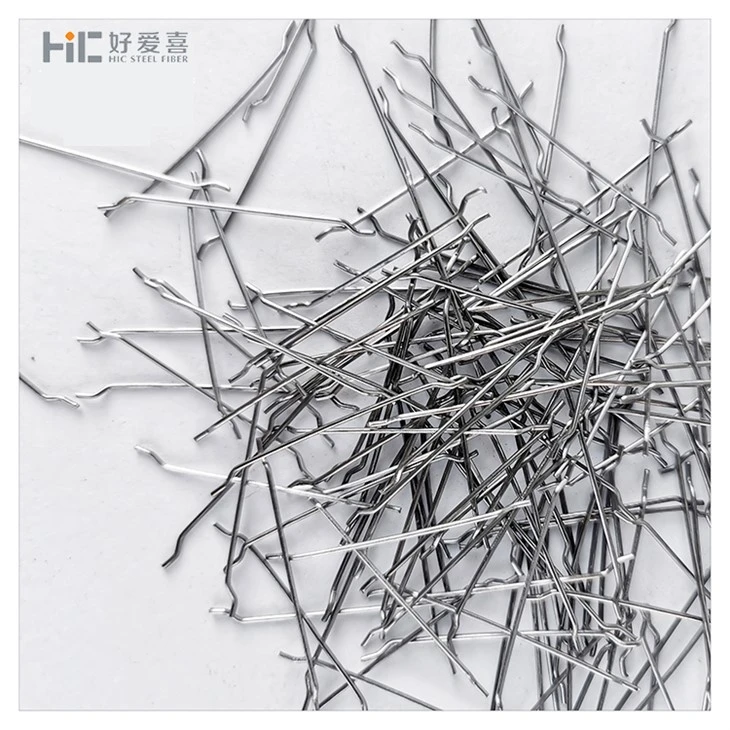
Hooked end steel fibers improve the impact resistance of concrete beams. The fibers absorb the energy from the impact and prevent the concrete from shattering. This makes the beams more reliable and safer in high - impact situations.
How to Use Hooked End Steel Fibers in Concrete Beams
Mixing
The first step is to mix the hooked end steel fibers properly with the concrete. It's important to add the fibers gradually during the mixing process. This ensures that the fibers are evenly distributed throughout the concrete. If the fibers clump together, it won't work as effectively.
We usually recommend using a mechanical mixer to get the best results. And make sure to follow the recommended dosage. The dosage depends on the specific requirements of the project, such as the expected load on the beam and the desired level of performance.
Placement
When placing the fiber - reinforced concrete for the beams, it's important to handle it carefully. Just like with regular concrete, you need to ensure proper compaction. Use vibration techniques to remove any air bubbles and make sure the concrete fills all the spaces in the formwork.
Also, be aware that the presence of fibers may slightly change the workability of the concrete. You might need to adjust the water - cement ratio a bit to get the right consistency.
Case Studies
There have been many successful projects where hooked end steel fibers have been used in concrete beams. For example, in a recent bridge construction project, the engineers decided to use our Loose Hooked End Steel Fiber in the bridge beams.
The bridge was designed to withstand heavy traffic loads and environmental factors. After the construction was completed, tests showed that the beams had significantly higher flexural strength and crack resistance compared to traditional concrete beams. The bridge has been in service for several years now, and there have been no major structural issues reported.
In another industrial building project, the use of hooked end steel fibers in the concrete beams improved the impact resistance of the structure. The building houses heavy machinery, and the beams have been able to handle the vibrations and occasional impacts without any problems.
Cost - Benefit Analysis
Some people might think that using hooked end steel fibers in concrete beams will increase the cost significantly. But when you look at the long - term benefits, it's actually a cost - effective solution.
Sure, the initial cost of the fibers and the slightly more complex mixing process may add a bit to the construction cost. However, the improved performance means less maintenance in the long run. You won't have to worry as much about repairing cracks or replacing damaged beams.

Also, the increased durability and safety of the structure can lead to lower insurance costs. So, overall, the cost - benefit ratio is quite favorable.
Conclusion
So, to sum it up, hooked end steel fibers can definitely be used in concrete beams, and they offer a whole bunch of benefits. They improve flexural strength, crack resistance, and impact resistance, making the beams more reliable and durable.
If you're working on a construction project that involves concrete beams, I highly recommend considering using our Hooked End Steel Fiber. Whether you need Steel Fiber for Shotcrete or Loose Hooked End Steel Fiber, we've got you covered.

If you're interested in learning more or want to discuss your specific project requirements, don't hesitate to reach out. We're here to help you make the best choice for your construction needs.
References
- Naaman, A. E., & Reinhardt, H. W. (2003). Fibre - Reinforced Concrete: Design and Applications. E & FN Spon.
- ACI Committee 544. (1996). State - of - the - Art Report on Fiber - Reinforced Concrete. American Concrete Institute.
- Barr, B. I. G. (1991). Fibre Reinforced Cement and Concrete. Blackie Academic & Professional.