

Can Hooked End Steel Fiber be used in marine construction?
As a supplier of Hooked End Steel Fiber, I often get asked about the feasibility of using our product in marine construction. Marine construction presents a unique set of challenges due to the harsh environment, including exposure to saltwater, high humidity, and strong waves. In this blog post, I will explore whether Hooked End Steel Fiber can be effectively used in marine construction and discuss its benefits and considerations.
Understanding Hooked End Steel Fiber
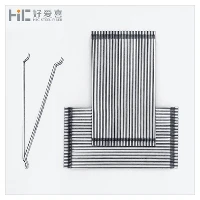
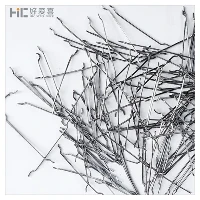
Hooked End Steel Fiber is a type of reinforcement material commonly used in concrete to enhance its mechanical properties. These fibers are typically made from high - strength steel and have hooked ends, which provide better anchorage within the concrete matrix. When added to concrete, they improve its tensile strength, flexural strength, and toughness, reducing the risk of cracking and increasing its durability.
Advantages of Using Hooked End Steel Fiber in Marine Construction
1. Enhanced Durability
One of the primary concerns in marine construction is the durability of the structure. Saltwater is highly corrosive, and it can cause significant damage to concrete over time. Hooked End Steel Fiber can help improve the durability of concrete in marine environments. The fibers act as a barrier, reducing the penetration of chloride ions into the concrete. Chloride ions are a major cause of corrosion in steel reinforcement within concrete. By minimizing chloride ingress, the fibers help protect the internal steel reinforcement and extend the service life of the marine structure.
2. Crack Resistance
Marine structures are subjected to various stresses, such as wave action, tidal forces, and thermal expansion and contraction. These stresses can lead to the formation of cracks in concrete. Hooked End Steel Fiber can effectively control crack propagation. When a crack starts to form in the concrete, the fibers bridge the crack, transferring the stress across the crack and preventing it from growing larger. This crack - resistance property is crucial in marine construction, as even small cracks can allow water and salt to penetrate the concrete, accelerating the corrosion process.
3. Improved Flexural and Tensile Strength
Marine structures often need to withstand bending and tensile forces. Hooked End Steel Fiber can significantly improve the flexural and tensile strength of concrete. In applications such as marine decks, piers, and breakwaters, the enhanced strength provided by the fibers allows the structure to better resist the forces exerted by waves and other environmental factors. This can lead to a more stable and reliable marine structure.
4. Impact Resistance
Marine structures may be exposed to impacts from floating debris, ships, or other objects. Hooked End Steel Fiber can improve the impact resistance of concrete. The fibers absorb and distribute the energy from an impact, reducing the likelihood of damage to the concrete. This is particularly important for structures such as quay walls and offshore platforms, which are at risk of being struck by vessels.
Considerations for Using Hooked End Steel Fiber in Marine Construction
1. Corrosion Protection
Although Hooked End Steel Fiber can help protect the internal steel reinforcement in concrete, the fibers themselves are made of steel and are also susceptible to corrosion in a marine environment. To address this issue, the steel fibers can be coated with a corrosion - resistant material, such as epoxy. Epoxy - coated Hooked End Steel Fiber provides an additional layer of protection against corrosion, ensuring the long - term performance of the fibers in the concrete.
2. Mix Design
The proper mix design is crucial when using Hooked End Steel Fiber in marine construction. The fiber content, water - cement ratio, and other factors need to be carefully considered. A higher fiber content generally leads to better performance, but it can also affect the workability of the concrete. The water - cement ratio should be optimized to ensure both good workability and high strength. Additionally, appropriate admixtures may be required to improve the dispersion of the fibers in the concrete and enhance its overall properties.
3. Quality Control
Strict quality control measures should be implemented during the production and installation of concrete with Hooked End Steel Fiber in marine construction. The quality of the fibers, including their dimensions, strength, and coating (if any), should be carefully inspected. During the concrete mixing process, proper mixing procedures need to be followed to ensure uniform distribution of the fibers. In the construction phase, proper placement and compaction of the concrete are essential to achieve the desired performance.
Applications of Hooked End Steel Fiber in Marine Construction
1. Marine Decks
Marine decks are constantly exposed to saltwater, waves, and traffic. Hooked End Steel Fiber can be used to improve the durability and crack resistance of marine decks. The enhanced strength and toughness provided by the fibers allow the deck to better withstand the daily wear and tear, as well as the harsh marine environment. For more information on wear - resistant Hooked End Steel Fiber suitable for marine decks, you can visit Wear Resistant Hooked End Steel Fiber.


2. Piers and Pilings
Piers and pilings are critical components of marine structures. They need to support the weight of the superstructure and resist the forces exerted by waves and currents. Hooked End Steel Fiber can be incorporated into the concrete of piers and pilings to improve their flexural and tensile strength. Cold - drawn steel wire fiber, a type of Hooked End Steel Fiber, is often used in these applications. You can learn more about Cold Drawn Steel Wire Fibre.
3. Breakwaters
Breakwaters are used to protect harbors and other coastal structures from the impact of waves. Hooked End Steel Fiber can enhance the impact resistance and durability of breakwaters. The fibers help the breakwater withstand the high - energy waves and prevent damage from wave action. For a wide range of Hooked End Steel Fibers suitable for breakwater construction, you can check Hooked End Steel Fibers.
Conclusion
In conclusion, Hooked End Steel Fiber can be effectively used in marine construction. Its numerous advantages, such as enhanced durability, crack resistance, improved flexural and tensile strength, and impact resistance, make it a valuable reinforcement material for marine structures. However, proper considerations, including corrosion protection, mix design, and quality control, need to be taken into account to ensure the long - term performance of the concrete.
If you are involved in marine construction projects and are interested in using Hooked End Steel Fiber, I encourage you to contact us for more information. We can provide you with high - quality Hooked End Steel Fiber products and technical support to meet your specific project requirements. Let's work together to build more durable and reliable marine structures.
References
- Neville, A. M. (1995). Properties of Concrete. Pearson Education.
- ACI Committee 544. (1982). State - of - the - Art Report on Fiber Reinforced Concrete. American Concrete Institute.
- Malhotra, V. M. (1990). High - Performance Concrete. E & FN Spon.