



Can Hooked End Steel Fiber be used in lightweight concrete?
Lightweight concrete has gained significant popularity in the construction industry due to its numerous advantages, such as reduced dead load, improved thermal insulation, and enhanced workability. As a supplier of Hooked End Steel Fiber, I often receive inquiries about the compatibility and benefits of using our product in lightweight concrete. In this blog post, I will delve into the topic and explore whether Hooked End Steel Fiber can be effectively used in lightweight concrete.
Understanding Lightweight Concrete
Lightweight concrete is a type of concrete that has a lower density compared to normal-weight concrete. It is typically made by replacing a portion of the coarse aggregate with lightweight materials such as expanded shale, clay, or slate. These lightweight aggregates reduce the overall weight of the concrete while maintaining its strength and durability. Lightweight concrete is commonly used in applications where weight reduction is critical, such as high-rise buildings, bridge decks, and precast elements.
The Role of Hooked End Steel Fiber
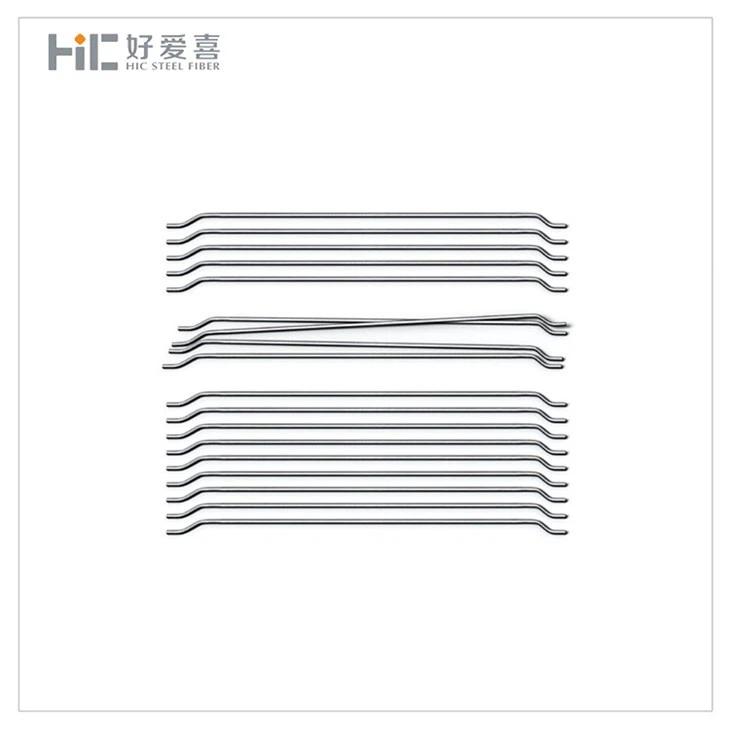
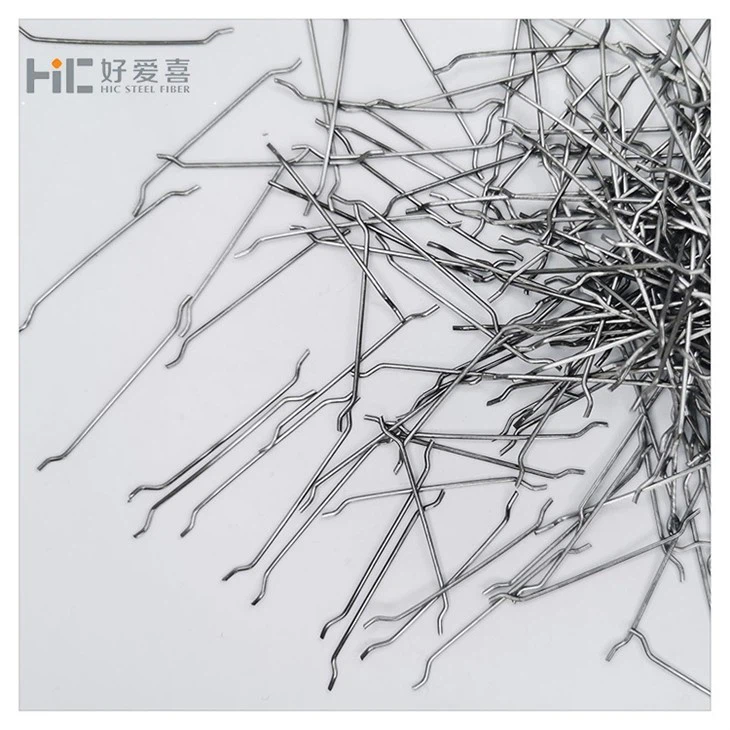
Hooked End Steel Fiber is a type of reinforcement material that is added to concrete to improve its mechanical properties. The fibers are typically made of high-strength steel and have a hooked end design, which provides better anchorage within the concrete matrix. When added to concrete, the fibers act as a three-dimensional reinforcement system, distributing stress and preventing the propagation of cracks. This results in improved tensile strength, flexural strength, impact resistance, and durability of the concrete.
Compatibility of Hooked End Steel Fiber with Lightweight Concrete
One of the key considerations when using Hooked End Steel Fiber in lightweight concrete is its compatibility with the lightweight aggregates. The fibers need to be able to disperse evenly throughout the concrete mix and bond effectively with the aggregates. In general, Hooked End Steel Fiber can be used in lightweight concrete as long as the following conditions are met:
- Proper Mix Design: The mix design of the lightweight concrete needs to be carefully optimized to ensure that the fibers are well-dispersed and do not clump together. This may require adjusting the water-cement ratio, aggregate gradation, and fiber dosage.
- Fiber Dosage: The fiber dosage needs to be carefully selected based on the specific requirements of the application. Higher fiber dosages may be required in lightweight concrete to achieve the desired mechanical properties.
- Aggregate Selection: The type and size of the lightweight aggregates can also affect the performance of the Hooked End Steel Fiber. It is important to select aggregates that have a good surface texture and are compatible with the fibers.
Benefits of Using Hooked End Steel Fiber in Lightweight Concrete
When used in lightweight concrete, Hooked End Steel Fiber offers several benefits, including:
- Improved Mechanical Properties: The addition of Hooked End Steel Fiber can significantly improve the tensile strength, flexural strength, and impact resistance of lightweight concrete. This makes the concrete more durable and less prone to cracking and damage.
- Enhanced Crack Resistance: The fibers act as a crack arrester, preventing the propagation of cracks and reducing the risk of structural failure. This is particularly important in lightweight concrete, which is more susceptible to cracking due to its lower density.
- Increased Durability: The fibers can also improve the durability of lightweight concrete by reducing the permeability and increasing the resistance to chemical attack and abrasion. This extends the service life of the concrete and reduces maintenance costs.
- Better Workability: The addition of Hooked End Steel Fiber can improve the workability of lightweight concrete, making it easier to place and finish. This can result in a smoother surface finish and reduced labor costs.
Applications of Hooked End Steel Fiber in Lightweight Concrete
Hooked End Steel Fiber can be used in a wide range of applications in lightweight concrete, including:
- High-Rise Buildings: Lightweight concrete reinforced with Hooked End Steel Fiber can be used in the construction of high-rise buildings to reduce the dead load and improve the seismic performance.
- Bridge Decks: The use of Hooked End Steel Fiber in lightweight concrete bridge decks can improve the durability and reduce the maintenance requirements.
- Precast Elements: Lightweight concrete precast elements, such as wall panels and floor slabs, can be reinforced with Hooked End Steel Fiber to improve their strength and durability.
- Industrial Floors: Steel Fiber for Commercial and Industrial Floor can be used in lightweight concrete industrial floors to improve the wear resistance and reduce the risk of cracking.
Conclusion
In conclusion, Hooked End Steel Fiber can be effectively used in lightweight concrete to improve its mechanical properties, crack resistance, durability, and workability. However, it is important to carefully consider the compatibility of the fibers with the lightweight aggregates and optimize the mix design to ensure the best performance. As a supplier of High Strength Steel Fiber and Wear Resistant Hooked End Steel Fiber, we have the expertise and experience to provide you with the right product and technical support for your lightweight concrete applications. If you are interested in using Hooked End Steel Fiber in your next project, please do not hesitate to contact us for more information and to discuss your specific requirements. We look forward to working with you to achieve your construction goals.
References
- ACI Committee 544. (1996). State-of-the-Art Report on Fiber-Reinforced Concrete. American Concrete Institute.
- Naaman, A. E., & Reinhardt, H. W. (2003). Fibre-Reinforced Concrete: Design and Applications. Taylor & Francis.
- Mindess, S., Young, J. F., & Darwin, D. (2003). Concrete: Microstructure, Properties, and Materials. Prentice Hall.