


In recent years, the construction industry has witnessed a growing interest in innovative materials that can enhance the performance and sustainability of concrete structures. Geopolymer concrete, a novel alternative to traditional Portland cement concrete, has emerged as a promising solution due to its lower carbon footprint and excellent mechanical properties. On the other hand, cold drawn steel wire fibre has long been recognized for its ability to improve the toughness, ductility, and crack resistance of concrete. In this blog post, we, as a leading cold drawn steel wire fibre supplier, will explore the feasibility and benefits of using cold drawn steel wire fibre in geopolymer concrete.
Understanding Geopolymer Concrete
Geopolymer concrete is a type of concrete that is produced by activating aluminosilicate materials, such as fly ash, slag, or metakaolin, with an alkaline solution. Unlike traditional Portland cement concrete, which relies on the hydration of cement to develop strength, geopolymer concrete forms a three - dimensional network structure through a geopolymerization process. This results in several advantages, including high early strength, excellent durability, and resistance to chemical attack. Geopolymer concrete also has a significantly lower carbon dioxide emission during production, making it an environmentally friendly option.
Cold Drawn Steel Wire Fibre: An Overview
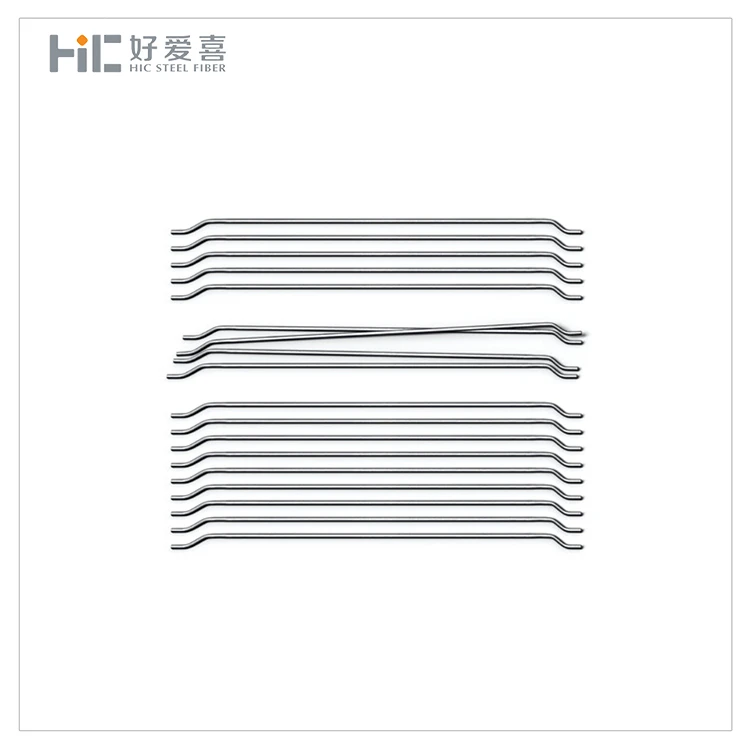
Cold drawn steel wire fibre is manufactured by cold drawing high - strength steel wires into thin fibres. These fibres are typically straight or have hooked ends to improve their bonding with the concrete matrix. The cold drawing process imparts high tensile strength and ductility to the fibres, enabling them to effectively resist cracking and enhance the overall performance of the concrete.
There are different types of cold drawn steel wire fibres available in the market. For instance, the Low Load Hooked End Steel Fiber is designed to provide enhanced crack resistance at low loads, while the Hooked End Type Steel Fiber and Hooked End Steel Fibers are widely used for improving the toughness and post - crack performance of concrete.
Feasibility of Using Cold Drawn Steel Wire Fibre in Geopolymer Concrete
Bonding Mechanism
One of the key factors in determining the effectiveness of using cold drawn steel wire fibre in geopolymer concrete is the bonding between the fibres and the geopolymer matrix. The alkaline environment in geopolymer concrete can have a significant impact on the surface properties of the steel fibres. In some cases, the alkaline solution can react with the steel surface, forming a layer that enhances the chemical bonding between the fibre and the matrix. Additionally, the mechanical interlocking provided by the hooked ends of the fibres further improves the bond strength.
Mechanical Properties Enhancement
The addition of cold drawn steel wire fibres to geopolymer concrete can lead to significant improvements in its mechanical properties. In terms of flexural strength, the fibres act as bridges across cracks, preventing them from propagating and increasing the load - carrying capacity of the concrete. Tensile strength is also enhanced as the fibres resist the pulling forces and distribute the stress more evenly throughout the matrix. Compressive strength may also show some improvement, especially in the post - peak region, where the fibres help to maintain the integrity of the concrete structure.

Durability Improvement
Geopolymer concrete already has good durability characteristics, but the inclusion of cold drawn steel wire fibres can further enhance its resistance to various environmental factors. The fibres can prevent the ingress of harmful substances, such as water and chemicals, by bridging the cracks and reducing the permeability of the concrete. This helps to protect the concrete from corrosion, freeze - thaw damage, and abrasion, thereby extending the service life of the structure.
Experimental Evidence
Numerous research studies have been conducted to investigate the performance of cold drawn steel wire fibre - reinforced geopolymer concrete. Some studies have reported that the addition of 1 - 2% by volume of steel fibres can increase the flexural strength of geopolymer concrete by up to 50%. The toughness of the concrete, as measured by the area under the load - deflection curve, also shows a significant improvement.
In terms of durability, tests have shown that fibre - reinforced geopolymer concrete has better resistance to chloride ion penetration and sulfate attack compared to plain geopolymer concrete. The fibres act as a barrier, reducing the rate of ingress of these harmful substances and protecting the internal structure of the concrete.
Challenges and Considerations
Dispersion of Fibres
One of the main challenges in using cold drawn steel wire fibres in geopolymer concrete is ensuring their proper dispersion throughout the matrix. If the fibres are not well - dispersed, they may form clumps, which can lead to weak spots in the concrete and reduce its overall performance. To overcome this issue, proper mixing techniques and the use of suitable admixtures may be required.
Cost
The cost of cold drawn steel wire fibres is relatively higher compared to some other types of concrete additives. However, when considering the long - term benefits, such as improved durability and reduced maintenance costs, the overall cost - effectiveness of using fibre - reinforced geopolymer concrete can be quite favorable.
Applications of Cold Drawn Steel Wire Fibre - Reinforced Geopolymer Concrete
Infrastructure Projects
In infrastructure projects, such as bridges, roads, and tunnels, the high strength and durability of cold drawn steel wire fibre - reinforced geopolymer concrete make it an ideal choice. The improved crack resistance can prevent the formation of large cracks, which can compromise the structural integrity of these critical structures.
Industrial Flooring
Industrial floors are subjected to heavy loads, abrasion, and chemical exposure. Cold drawn steel wire fibre - reinforced geopolymer concrete can provide the necessary strength, toughness, and durability to withstand these harsh conditions. The fibres help to prevent the formation of cracks and spalling, ensuring a long - lasting and low - maintenance floor surface.
Conclusion
In conclusion, cold drawn steel wire fibre can be effectively used in geopolymer concrete. The combination of the unique properties of geopolymer concrete and the reinforcement provided by the steel fibres offers significant advantages in terms of mechanical performance, durability, and sustainability. Although there are some challenges, such as fibre dispersion and cost, the benefits far outweigh these issues.
If you are involved in a construction project and are considering using cold drawn steel wire fibre - reinforced geopolymer concrete, we invite you to contact us for more information. Our team of experts can provide you with detailed technical advice and help you select the most suitable type of steel fibres for your specific application. We are committed to providing high - quality cold drawn steel wire fibres and excellent customer service. Let's work together to create more sustainable and high - performance concrete structures.
References
- Davidovits, J. (1994). Geopolymer chemistry and applications. Institut Géopolymère, Saint - Quentin - Fallavier, France.
- Banthia, N., & Gupta, A. (2006). Steel fiber reinforced concrete: An overview. Cement and Concrete Composites, 28(3), 241 - 249.
- Sumajouw, D. M. J., & Rangan, B. V. (2011). Flexural behavior of steel fiber - reinforced fly ash - based geopolymer concrete beams. Construction and Building Materials, 25(1), 297 - 304.