



Concrete pavements are an essential part of modern infrastructure, used in roads, highways, industrial floors, and many other applications. The durability, strength, and performance of these pavements are crucial for their long - term functionality and cost - effectiveness. One material that has gained significant attention in recent years for enhancing concrete pavement properties is CE steel fibers. As a supplier of CE Steel Fibers for Concrete, I am well - positioned to discuss whether these fibers are suitable for concrete pavements.

The Role of Steel Fibers in Concrete Pavements
Steel fibers are added to concrete to improve its mechanical properties. In concrete pavements, they can enhance the flexural strength, toughness, and crack resistance. When concrete is subjected to loads, cracks can form due to tensile stresses. Steel fibers act as a reinforcement mechanism, bridging these cracks and preventing them from propagating. This results in a more ductile and durable concrete pavement.
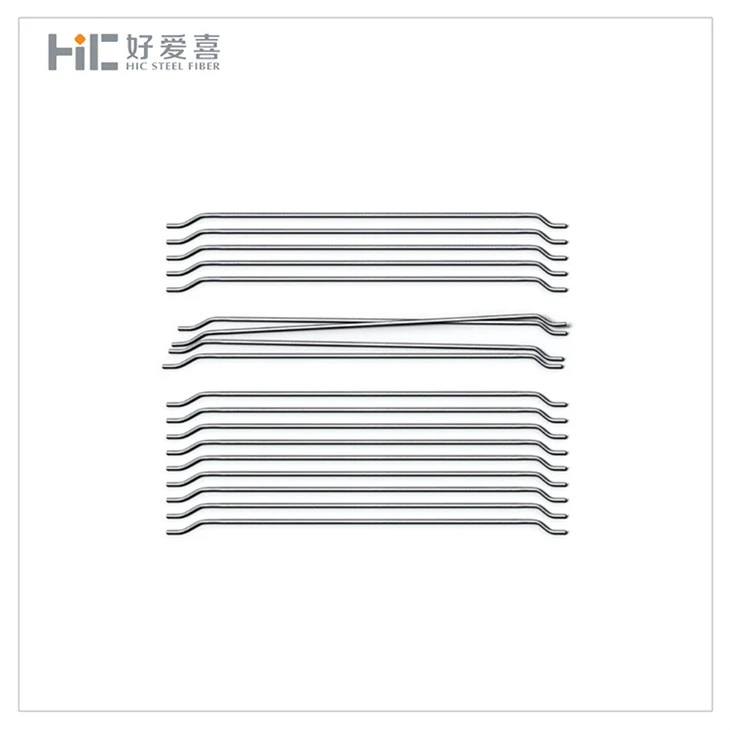
The hooked end design of steel fibers, such as our Hooked End Steel Fiber and Hooked End Steel Fibers, is particularly effective. The hooks at the ends of the fibers create a mechanical interlock with the concrete matrix, increasing the bond strength between the fibers and the concrete. This interlock allows the fibers to better transfer stresses and resist crack growth.
Advantages of CE Steel Fibers for Concrete Pavements
1. Enhanced Flexural Strength
Flexural strength is a critical property for concrete pavements, as they are often subjected to bending loads from traffic. CE steel fibers can significantly increase the flexural strength of concrete. A study by Naaman and Reinhardt (1996) showed that the addition of steel fibers can increase the flexural strength of concrete by up to 50%. This means that concrete pavements with CE steel fibers can withstand higher loads without cracking or failing, reducing the need for frequent repairs and replacements.
2. Improved Toughness
Toughness is the ability of a material to absorb energy before fracturing. In concrete pavements, toughness is important for resisting impact loads from vehicles and for withstanding dynamic stresses. CE steel fibers enhance the toughness of concrete by providing a three - dimensional reinforcement network. This network can absorb and dissipate energy, preventing sudden and catastrophic failure of the pavement. Our High Strength Hooked End Steel Fiber is designed to provide high toughness, making it suitable for high - traffic areas.
3. Crack Resistance
Cracking is a common problem in concrete pavements, which can lead to water infiltration, freeze - thaw damage, and reduced service life. CE steel fibers can effectively control crack development. They limit the width and length of cracks by bridging them and distributing the stress over a larger area. This not only improves the aesthetic appearance of the pavement but also enhances its durability and performance.
4. Fatigue Resistance
Concrete pavements are subjected to repeated loading from traffic, which can cause fatigue damage over time. CE steel fibers can improve the fatigue resistance of concrete by reducing the stress concentration at crack tips. The fibers act as a barrier to crack propagation under cyclic loading, extending the fatigue life of the pavement. This is especially important for pavements in high - traffic areas, such as highways and industrial yards.
Considerations for Using CE Steel Fibers in Concrete Pavements
1. Fiber Content
The amount of steel fibers added to concrete is an important factor. Too little fiber may not provide the desired improvement in properties, while too much fiber can lead to workability issues and increased cost. The optimal fiber content depends on various factors, such as the type of pavement, the expected load, and the concrete mix design. Generally, a fiber content of 0.5% - 2% by volume of concrete is recommended for most concrete pavement applications.
2. Mixing and Placement
Proper mixing and placement of concrete with steel fibers are crucial for achieving the desired performance. The fibers should be uniformly distributed throughout the concrete mix to ensure consistent reinforcement. Special mixing techniques may be required to prevent fiber balling and ensure proper dispersion. During placement, care should be taken to avoid segregation of the fibers and the concrete.
3. Cost - Benefit Analysis
While CE steel fibers can improve the performance of concrete pavements, they also add to the cost of the project. A cost - benefit analysis should be conducted to determine whether the use of steel fibers is economically viable. Factors such as the expected service life of the pavement, the reduction in maintenance costs, and the potential for increased traffic capacity should be considered. In many cases, the long - term benefits of using CE steel fibers, such as reduced maintenance and longer service life, outweigh the initial cost.
Case Studies
1. Industrial Floor Application
In an industrial warehouse, a concrete floor was constructed using CE steel fibers. The floor was subjected to heavy forklift traffic and dynamic loads. After several years of use, the floor showed minimal cracking and wear compared to a similar floor without steel fibers. The use of steel fibers not only improved the durability of the floor but also reduced the need for costly repairs and downtime.
2. Highway Pavement
On a busy highway, a section of concrete pavement was reinforced with CE steel fibers. The pavement was designed to withstand high - volume traffic and heavy trucks. After a few years of service, the fiber - reinforced section showed better resistance to cracking and rutting compared to the non - reinforced sections. This resulted in a smoother ride for motorists and reduced maintenance costs for the highway department.
Conclusion
In conclusion, CE steel fibers are highly suitable for concrete pavements. They offer significant advantages in terms of enhanced flexural strength, improved toughness, crack resistance, and fatigue resistance. While there are some considerations, such as fiber content, mixing, and cost - benefit analysis, the long - term benefits of using CE steel fibers make them a valuable addition to concrete pavement projects.
As a supplier of CE Steel Fibers for Concrete, we are committed to providing high - quality products and technical support to our customers. If you are considering using steel fibers in your concrete pavement project, we invite you to contact us for more information and to discuss your specific requirements. Our team of experts can help you select the right type and amount of steel fibers for your project, ensuring optimal performance and cost - effectiveness.
References
Naaman, A. E., & Reinhardt, H. W. (1996). Fibre - Reinforced Concrete: Design and Applications. E & FN Spon.